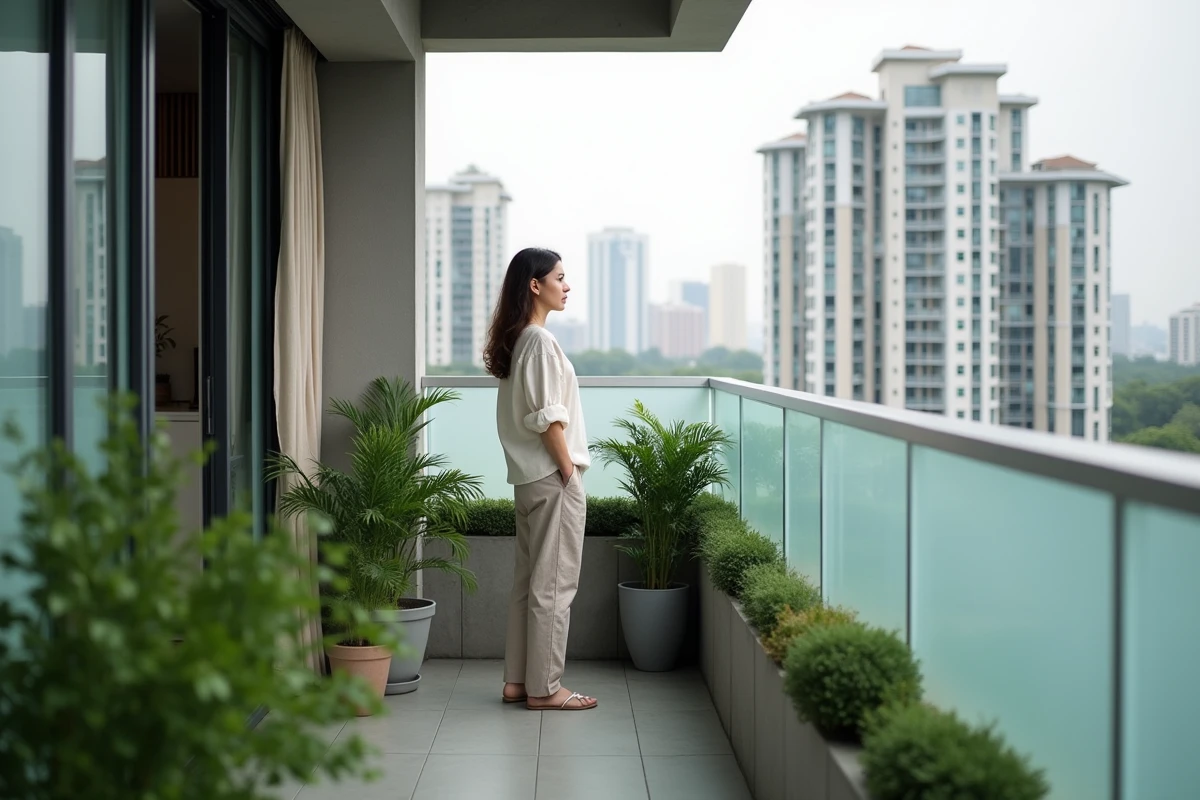
An upper-level apartment with large windows offers light but also exposes the interior to the views of neighboring buildings, accessible rooftops, or balconies across the way. Protecting oneself from prying eyes at height requires different solutions than those used at ground level, as the angle of view and light exposure change radically.
Several techniques allow you to regain your privacy without sacrificing brightness or the view of the sky. Each of the ten solutions below addresses a specific case depending on the configuration of your windows, terrace, or balcony.
1. Top-down/bottom-up shades to cover the bottom of the window
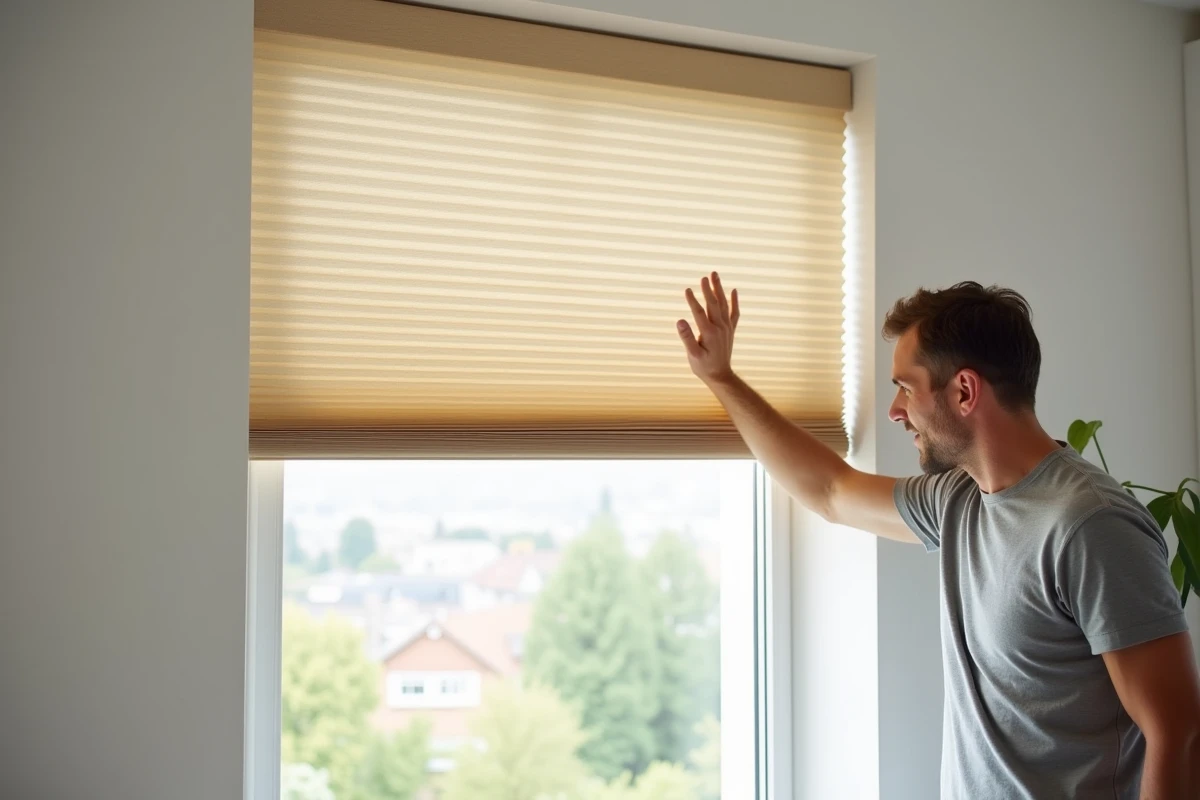
This type of shade opens from the top or the bottom, independently. The lower part of the window remains covered to block the view from the street or the building across, while the top remains clear to let in natural light.
This system is particularly suitable for upper-level apartments where the view comes from a building at the same level or slightly below. It is available in pleated or honeycomb versions, with fabrics that are more or less opaque. To explore more tips for hiding at height, combining several of these techniques often yields the best results.
2. Frosted adhesive film on glazing for a permanent effect
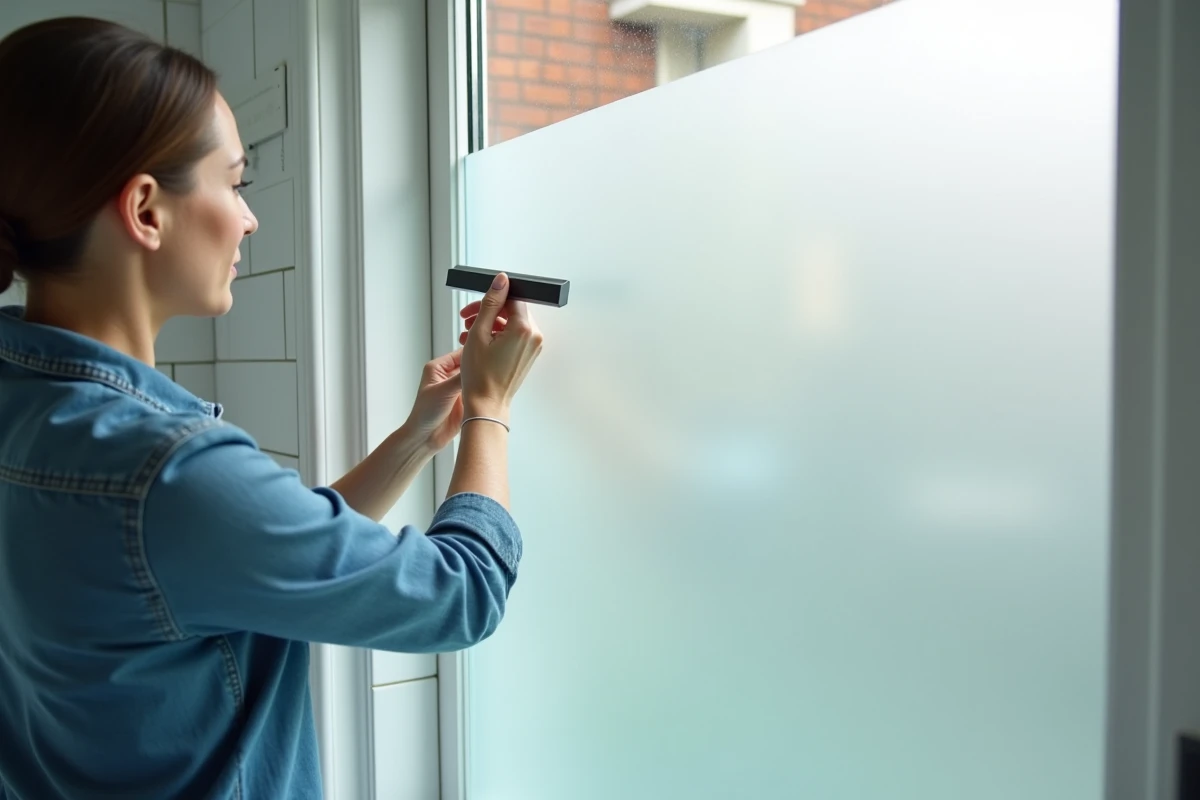
The frosted adhesive film sticks directly to the glazing and diffuses light while rendering the view opaque. Applied to the lower half of the window, it blocks views without darkening the room.
Its installation requires no drilling or wall mounting. It can be cut with a utility knife and easily replaced. Some films offer geometric patterns or frosted effects that add a decorative touch to the glass. However, caution: a low-quality film may yellow after a few years of sun exposure.
3. Opaque glazing or frosted glass for a definitive solution
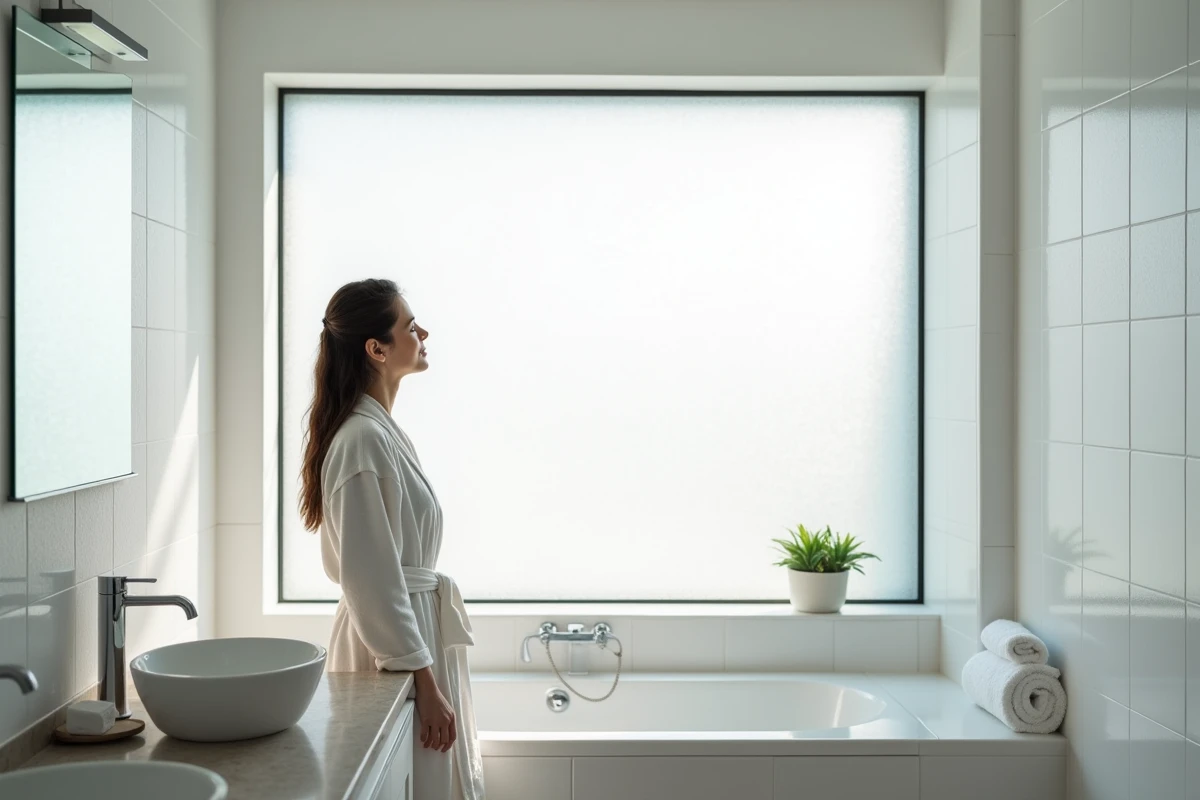
Replacing standard glazing with opal glass or frosted glass permanently eliminates the view. This option is particularly justified in wet areas (bathrooms, toilets) or hallways where the outside view is of no interest.
Opaque laminated glazing adds an advantage: it enhances resistance against break-in attempts, a useful criterion for upper-level apartments accessible via a balcony or neighboring rooftop.
4. Motorized roller shutters with adjustable slats
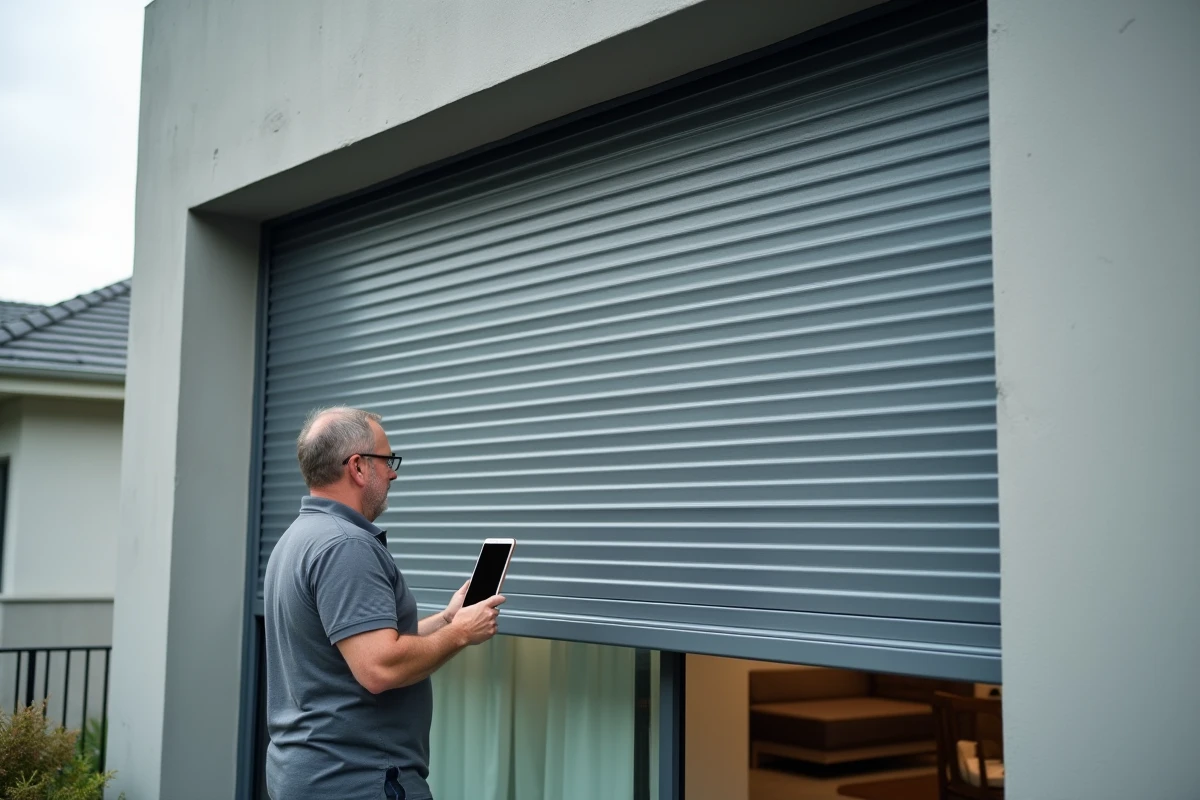
Adjustable slat roller shutters function like motorized exterior blinds. The slats tilt to block the view while allowing air and light to circulate.
They combine privacy protection, thermal insulation, and anti-burglary security. In summer, their semi-closed position reduces reliance on air conditioning by limiting heat entry. The additional cost compared to a standard shutter is offset by this triple function, especially in regions exposed to high heat.
5. Plant screen in pots on balcony or terrace
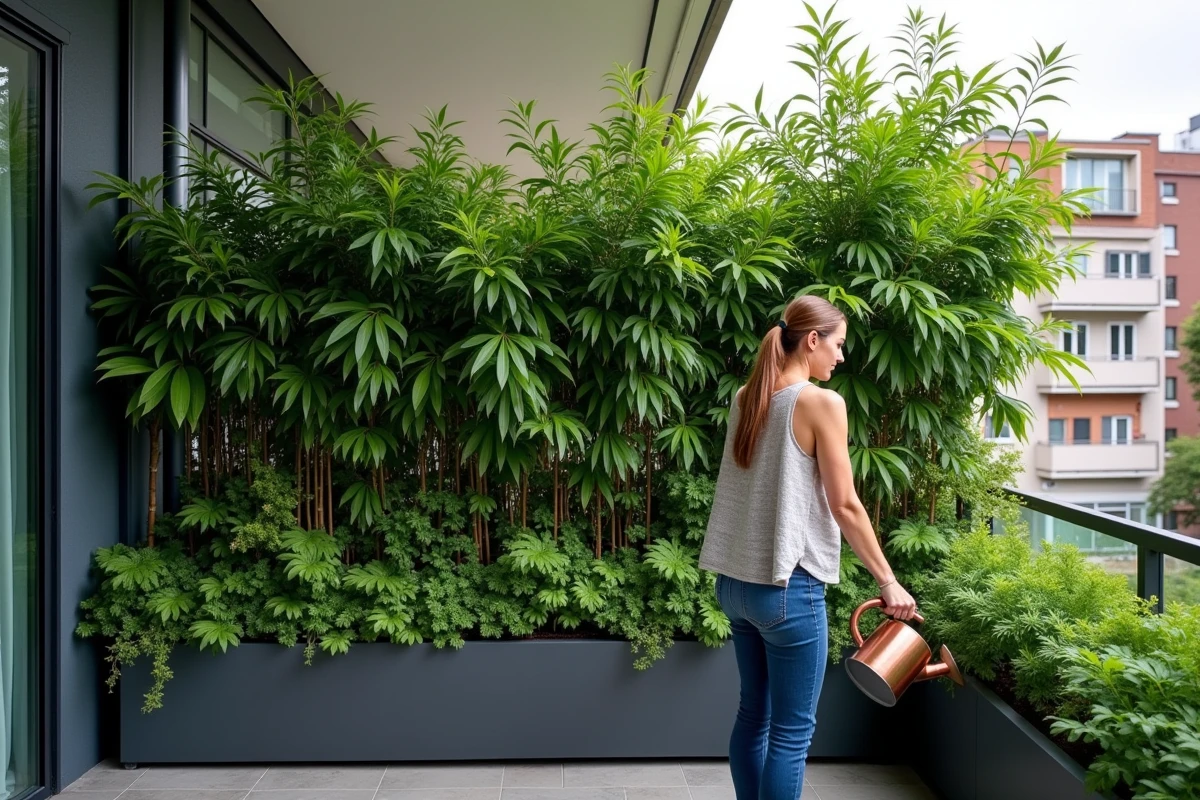
Tall plants grown in pots (non-invasive bamboo, ornamental grasses, laurels) create a natural screen on a balcony or terrace exposed to views. Their height can be controlled by pruning and the choice of container.
The main advantage is aesthetic: a plant screen transforms a mineral space into a green corner. The limitation comes from the weight of pots filled with moist soil, which should be checked against the load capacity of the balcony.
6. Climbing plants on vertical trellis
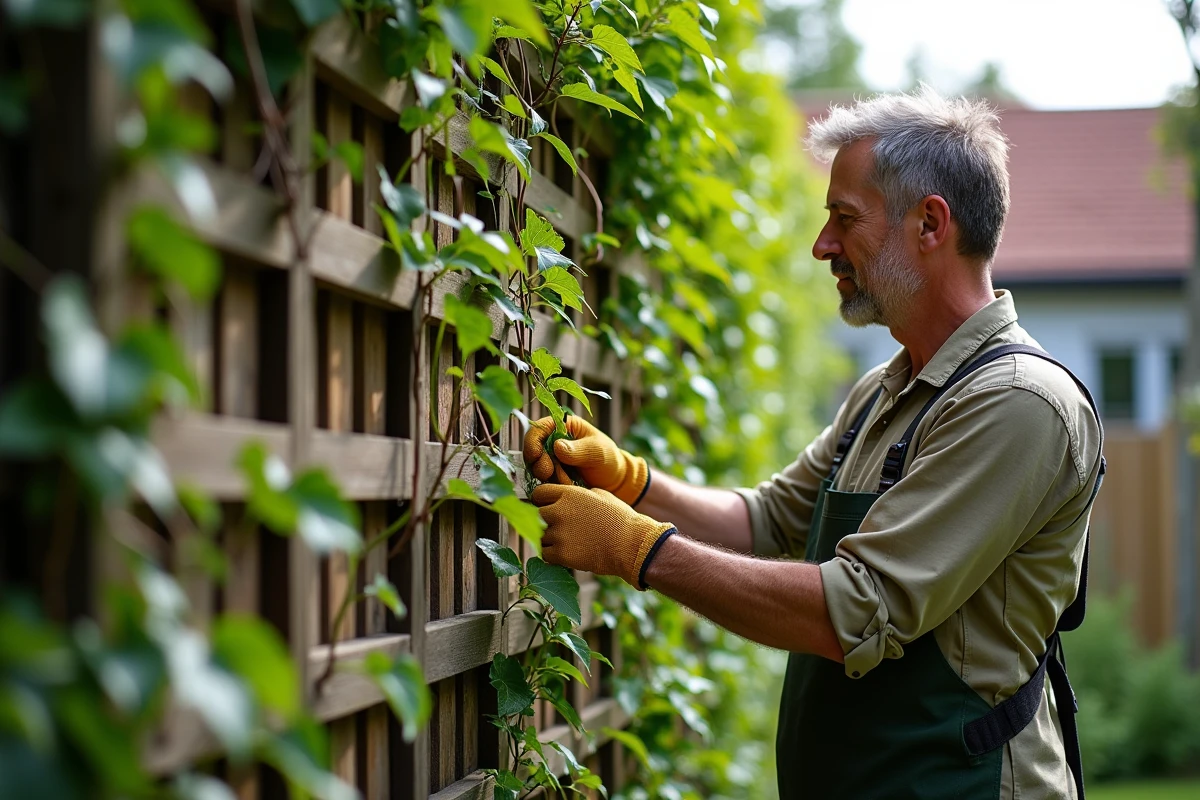
A trellis fixed against a railing or balcony wall serves as support for climbing plants (jasmine, clematis, ivy). The foliage gradually forms a dense plant curtain.
This solution requires patience: depending on the species, expect one to three growing seasons before achieving full coverage. In winter, deciduous climbing plants lose their leaves and no longer provide protection. Prefer ivy or star jasmine for persistent coverage.
7. Reed or slatted wood panel fixed to the railing
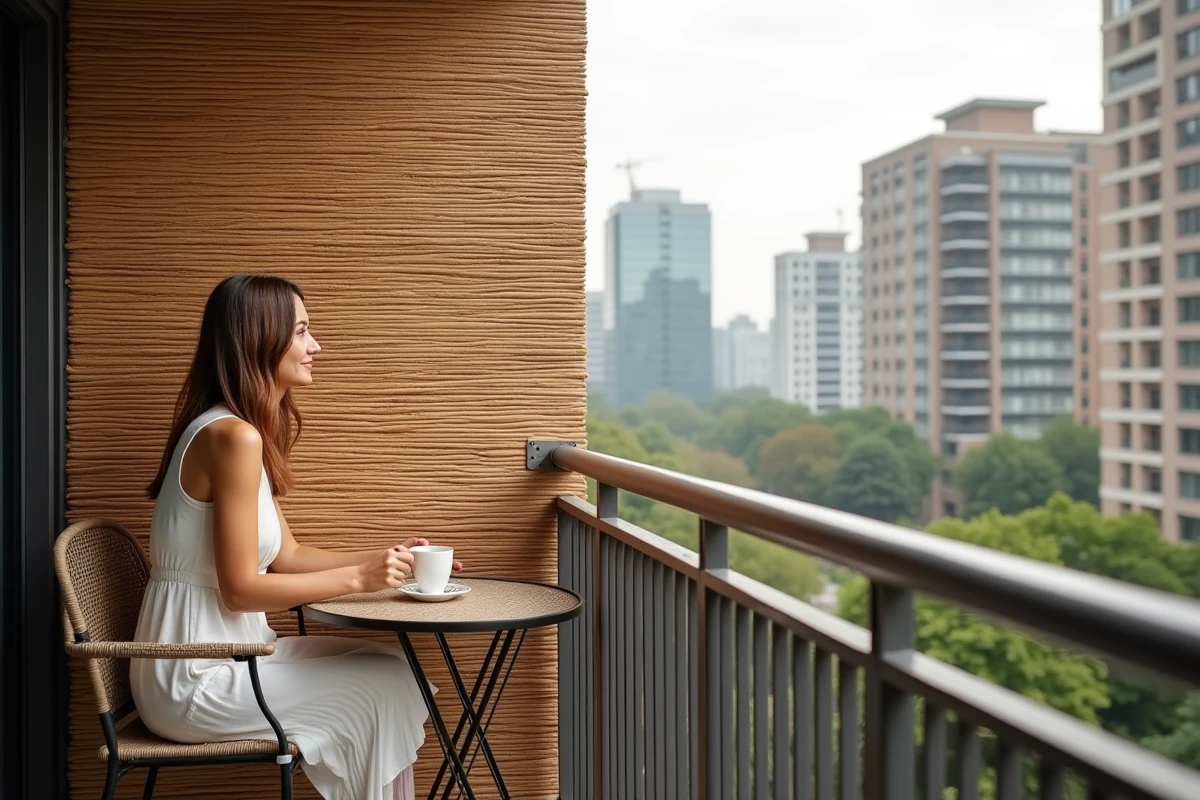
The reed screen (willow, split bamboo, heather) is fixed against the railing and effectively blocks lateral and frontal views. Slatted wood panels offer a more durable and wind-resistant alternative.
- PVC reed screens withstand weather better than natural reed, but their appearance is less warm.
- Treated wood panels last several years without maintenance.
- Check the co-ownership regulations before any visible fixings from outside the building.
8. Outdoor sheer or terrace curtain
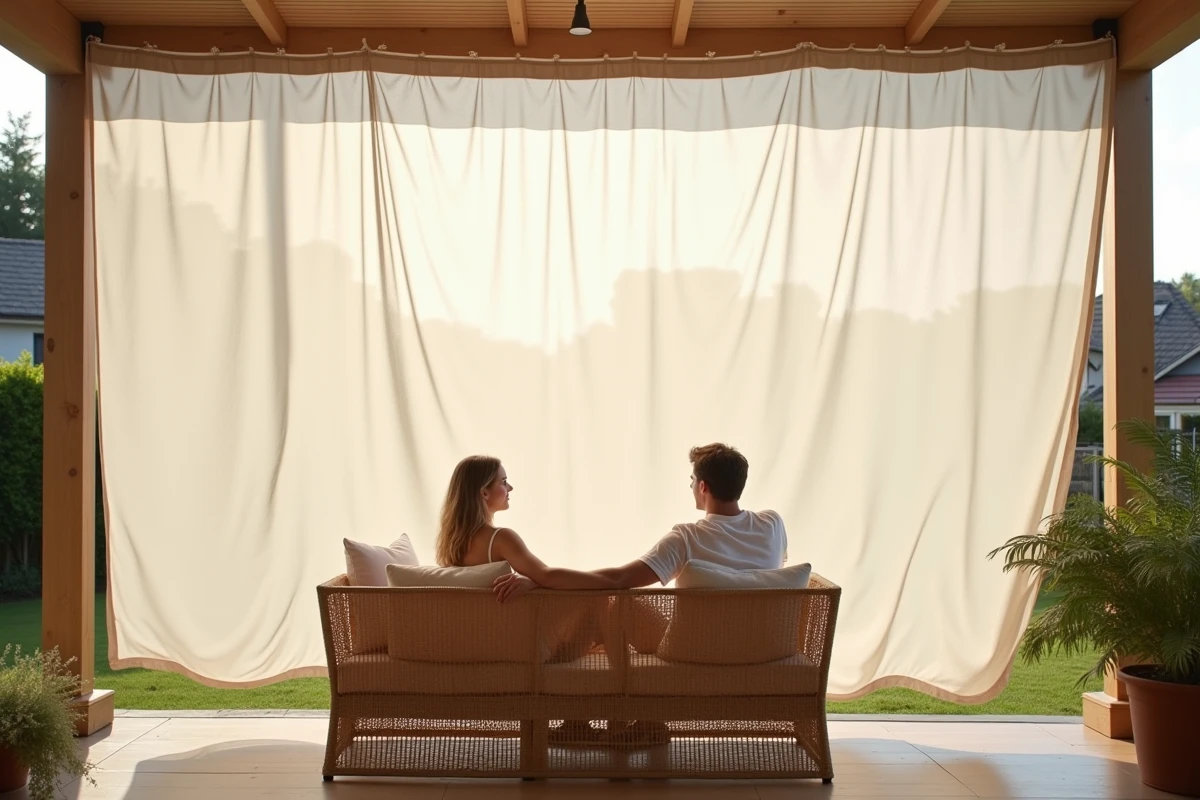
A sheer suspended on a rod or cable stretched between two points creates a soft curtain on a terrace or balcony. The fabric filters views while allowing the breeze to pass through.
This solution can be dismantled in minutes and leaves no trace, making it suitable for renters. The fabric should be treated for UV resistance and water repellency to withstand outdoor conditions. Weighted models at the bottom resist wind better.
9. Composite or aluminum screen on facade
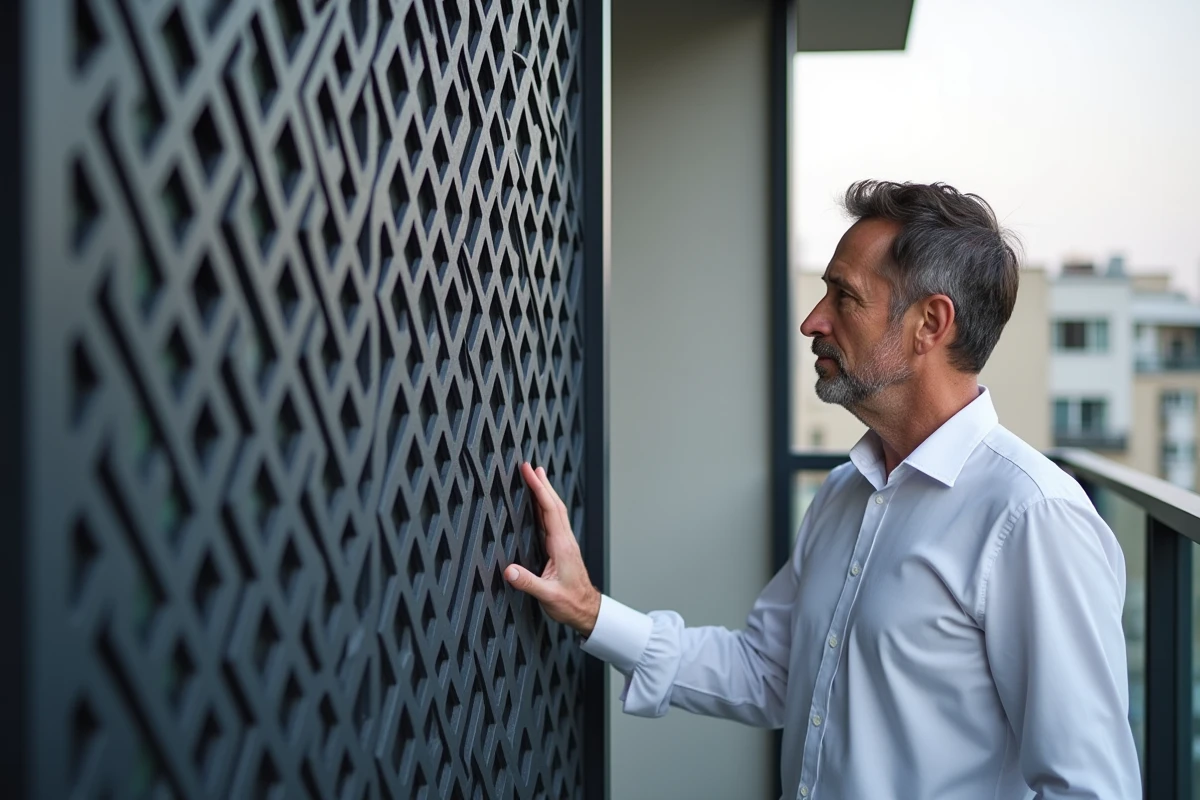
The screen consists of horizontally or vertically spaced slats that filter the view without blocking light. Versions in composite or aluminum require almost no maintenance and are UV resistant.
Fixed in front of a bay window or at the edge of a terrace, it also improves thermal comfort by reducing direct sunlight. Its contemporary style integrates well with modern facades. The cost remains higher than a reed screen, but durability compensates in the long run.
10. Repositionable opaque window paint
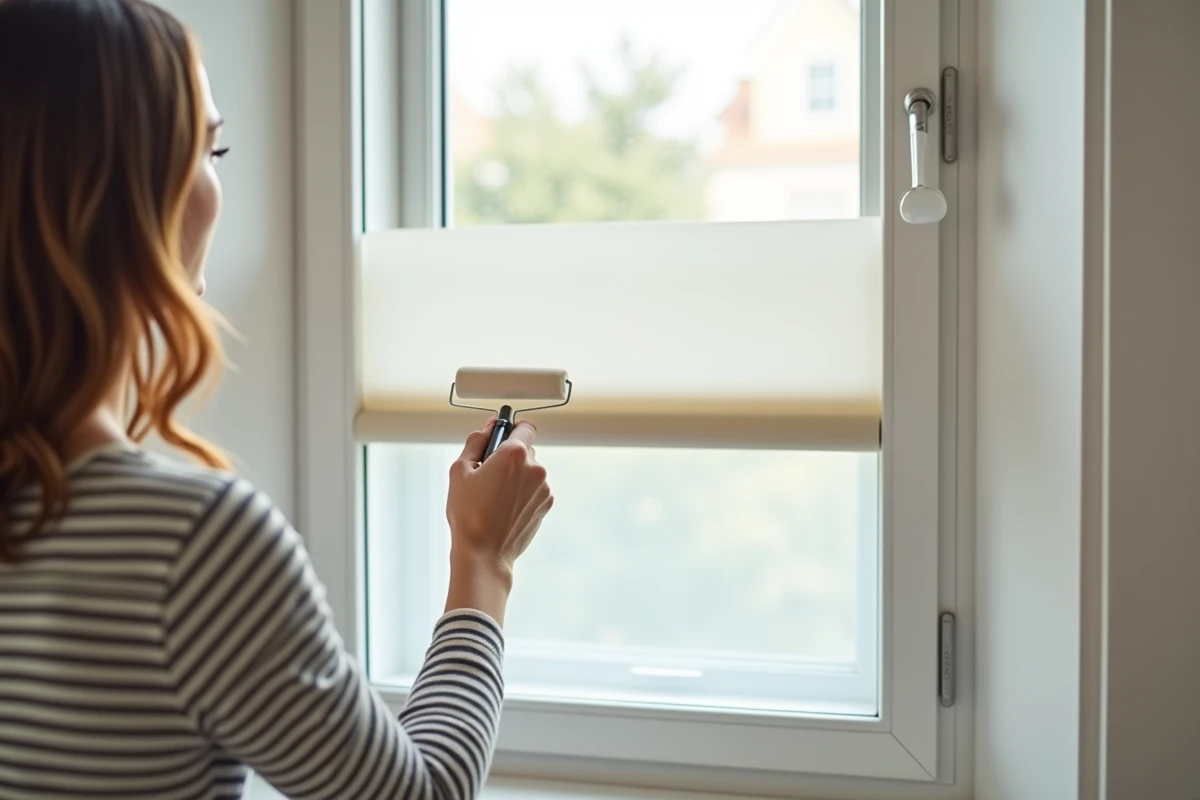
Specific paints for glazing can be applied with a roller or brush to create a temporary frosted effect. They can be removed with water or a scraper without damaging the glass.
This option is suitable for renters or temporary situations (work in the neighboring building, scaffolding). The finish is less clear than an adhesive film, but the ease of application and removal makes it a useful temporary solution.
Each configuration of elevated views calls for a different response. A top-down shade may sometimes be sufficient on its own, while a highly exposed balcony benefits from a combination of reed screen and potted plants. The common point of all these solutions: preserving natural light while cutting off the direct line of sight, a balance that distinguishes elevated protections from those intended for ground level.