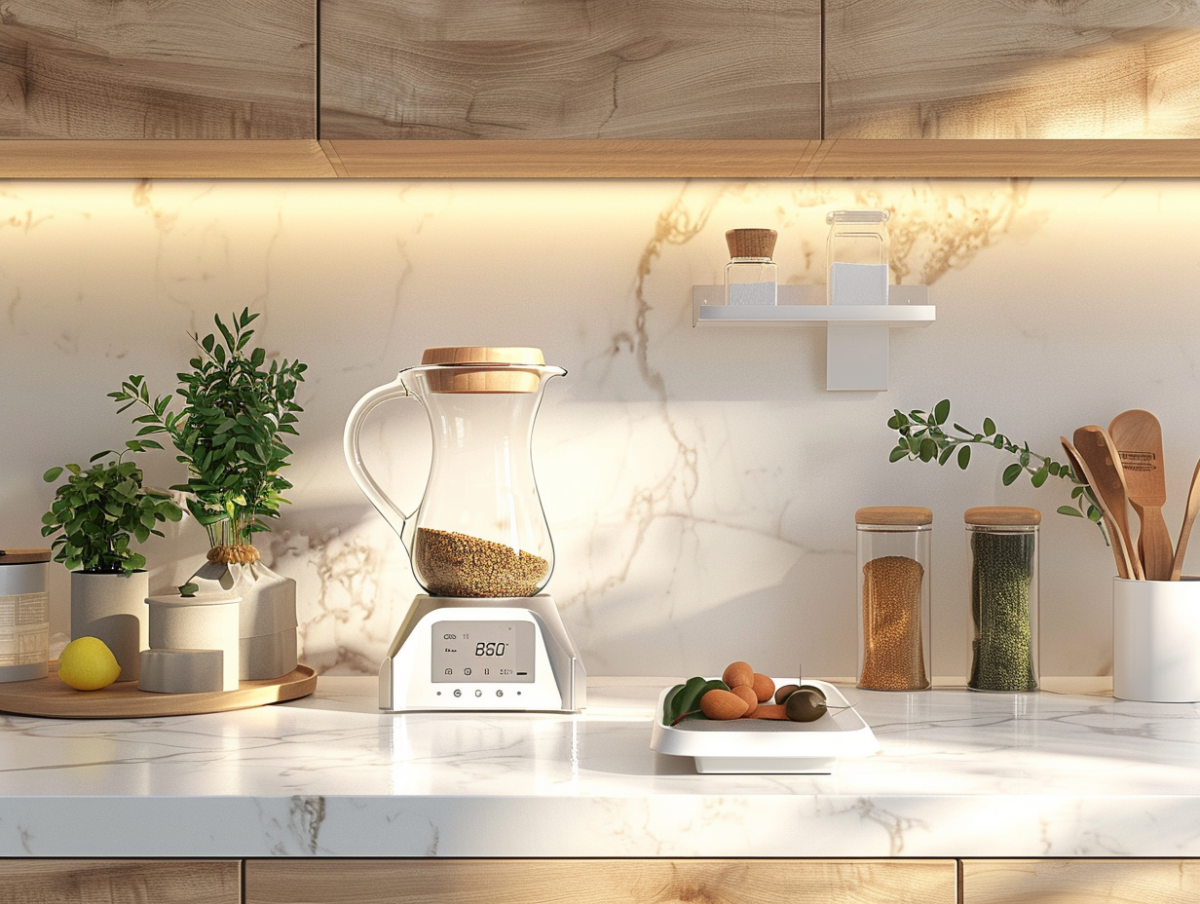
When it comes to converting liquid volumes into weight, a clear understanding of density principles is essential. Each liquid has its own density, which corresponds to the ratio of its mass to its volume. This property varies depending on the temperature and composition of the liquid. To perform this conversion accurately, it is imperative to know the specific density of the liquid in question. Chefs, scientists, and professionals in various fields rely on standardized density tables to carry out these calculations, allowing them to translate volumes into grams or kilograms, depending on practical or experimental needs.
Understanding Density to Convert Volumes into Weight
Density, a fundamental physical property in the subtle art of conversion, is defined as the ratio of mass to volume of a substance. In cooking, as in the laboratory, converting 20 cl into grams requires precise knowledge of the density of the ingredient. Take water, which has a density of 1 g/ml: 20 cl (or 200 ml) will correspond exactly to 200 grams. This perfect correspondence is not observed with lighter or denser liquids; oil, for example, with a density of 0.92 g/ml, will weigh less for an equivalent volume.
Ingredients vary widely in terms of density, leading to notable differences when measuring their mass. Milk, with a density of 1.03 g/ml, will be slightly heavier than water for the same volume, while ethyl alcohol, with a density of 0.79 g/ml, will be lighter. Professionals and knowledgeable amateurs rely on density tables to perform these conversions accurately, thus allowing for the transition from milliliters to grams with unwavering reliability.
For solids like flour or sugar, the process involves an additional step. The density of flour is 0.57 g/ml, while that of sugar is 0.85 g/ml; common volume measures such as a cup or a tablespoon will not translate to the same weight for these substances. As a result, the accuracy of conversions for these ingredients with varying densities necessitates consulting detailed references or using appropriate measuring tools like a precise kitchen scale.
Practical Conversion Guide for Common Ingredients
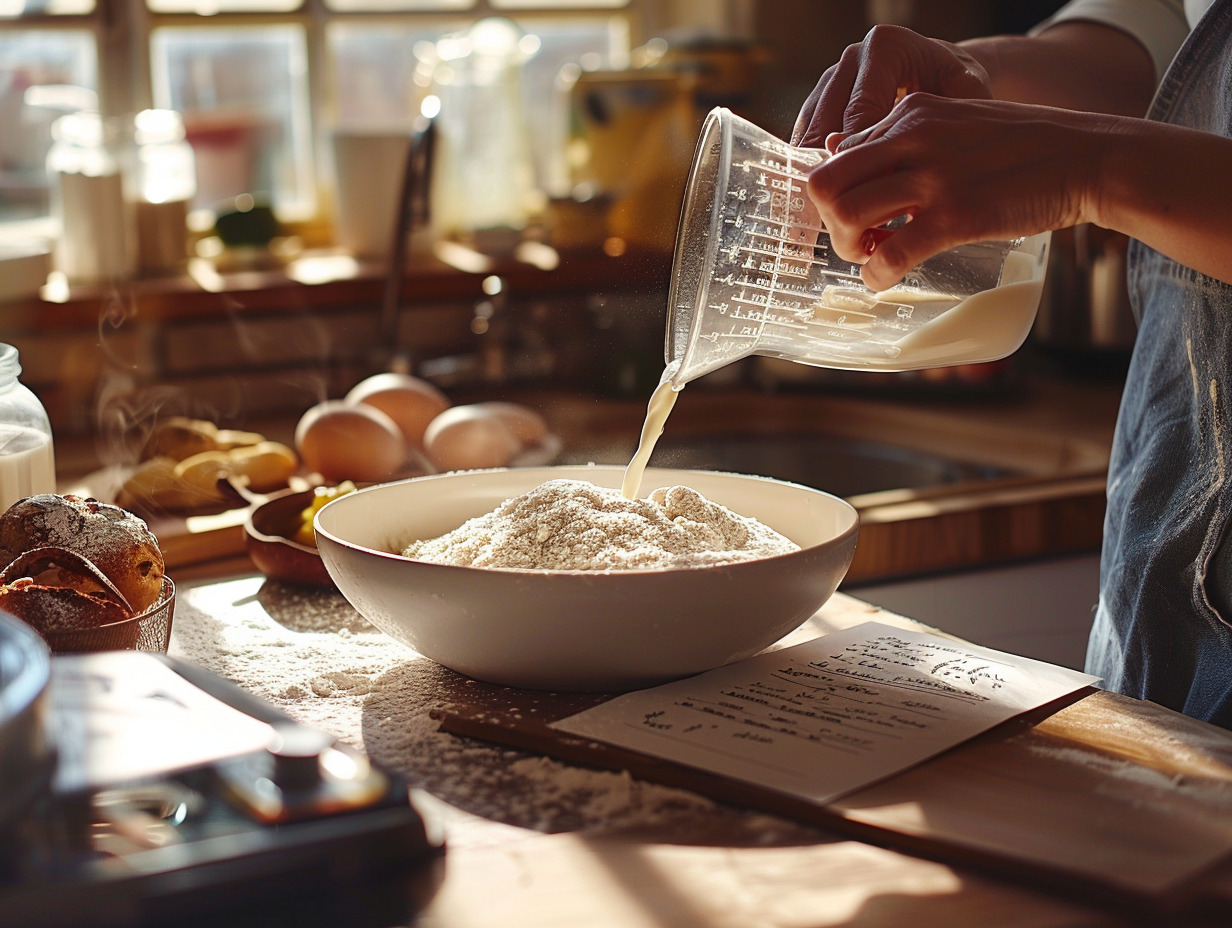
In the world of gastronomy and science, the accuracy of measurements is a guiding principle. Having a conversion table proves to be an indispensable tool for anyone wishing to master the equivalences between volumes and weights. These tables, which list the densities of the most common ingredients, allow for the conversion from milliliters to grams with clockwork precision. For solids, a standard cup is approximately equivalent to 240 ml, a tablespoon to 15 ml, and a teaspoon to 5 ml. Convert these volumes into weight using the specific densities, and you will obtain reliable measurements for each ingredient.
With the rise of digital tools, online converters now offer the ability to perform these calculations effortlessly. Intuitive, they simply require you to enter the ingredient and the desired volume to instantly provide the equivalent weight in grams. These tools are particularly useful for less conventional ingredients or for recipes requiring precise measurements.
The kitchen scale remains the go-to tool for weighing ingredients. Ideal for bakers and chemists, it ensures accurate measurements, provided it is properly tared before use. A precise scale, capable of measuring to the nearest gram, becomes a major asset for maintaining proportions, especially when the density of ingredients does not allow for a direct volume-to-weight conversion.
For everyday utensils, such as a yogurt pot or a mustard jar, often used as makeshift measures, knowledge of equivalences is fundamental. A yogurt pot has an approximate capacity of 125 ml, while a mustard jar typically holds 250 ml. By applying the density of the ingredient to these volumes, one can convert these containers into grams with satisfactory precision for most culinary applications.