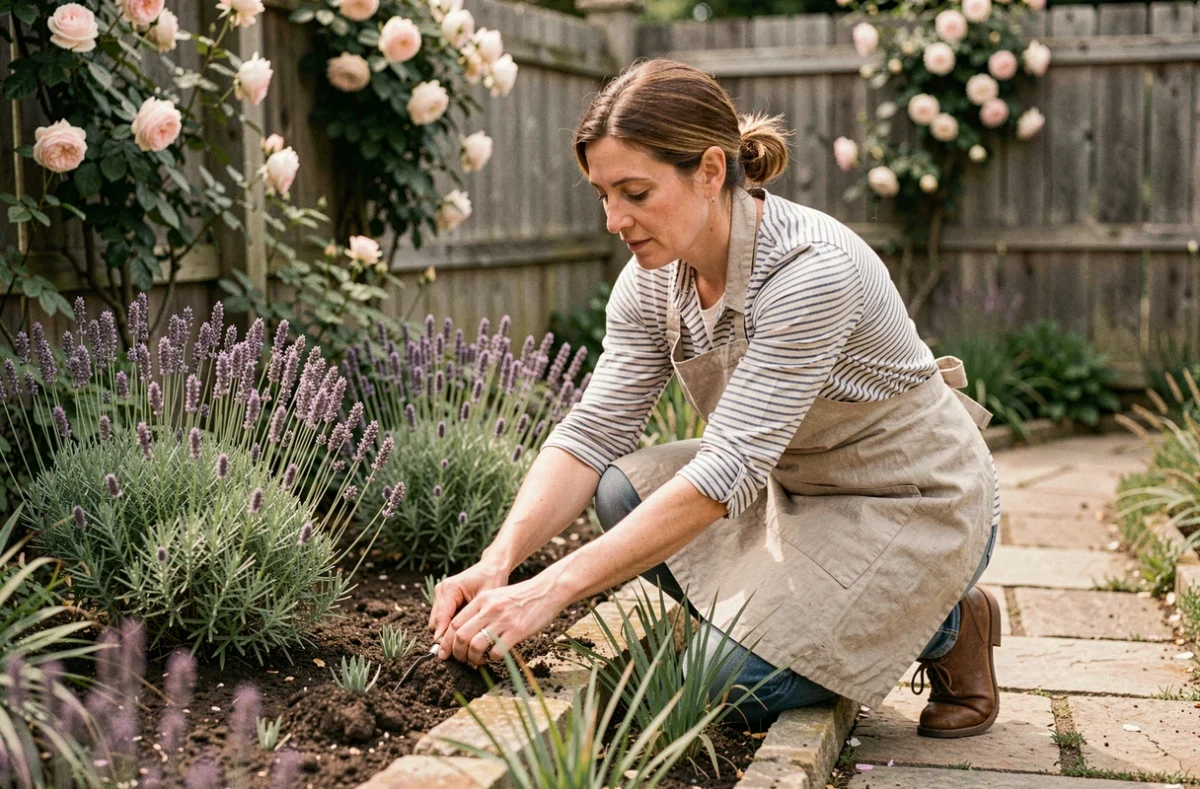
A pleasant garden is not created by accumulating plants and furniture. It starts with a few decisions made in advance, before you even buy your first shrub. Successful garden design begins with a careful assessment of the site, its exposure and its constraints, resulting in a harmonious space where every area has a clear purpose.
Soil, sunlight and water: three factors that shape everything else
Before drawing up any plans, observe your garden at different times of day. Identify areas that are always in shade, those that get the morning sun and those that bake in the afternoon. This simple survey will guide your choice of plants, as well as the location of your patio or dining area.
The soil deserves the same attention. Clay soil retains water and is poorly suited to lavender or Mediterranean grasses. Sandy soil drains quickly and calls for drought-tolerant plants. Take a handful of soil and squeeze it: if it forms a compact ball, clay is predominant. If it crumbles, sand is more prevalent.
Water is the most underestimated constraint. Many projects include a rainwater collection tank in the belief that it will make them exempt from watering restrictions. Drought measures are set by prefectural order and vary depending on the area and alert level. Before sizing an installation, check the local rules on VigiEau. A garden designed to thrive with little watering remains the best safeguard against dry summers.
If you would like a professional to handle this assessment, garden design by Le Jardinier Décorateur includes a site assessment tailored to each project.
Divide the garden into functional areas rather than decorative themes
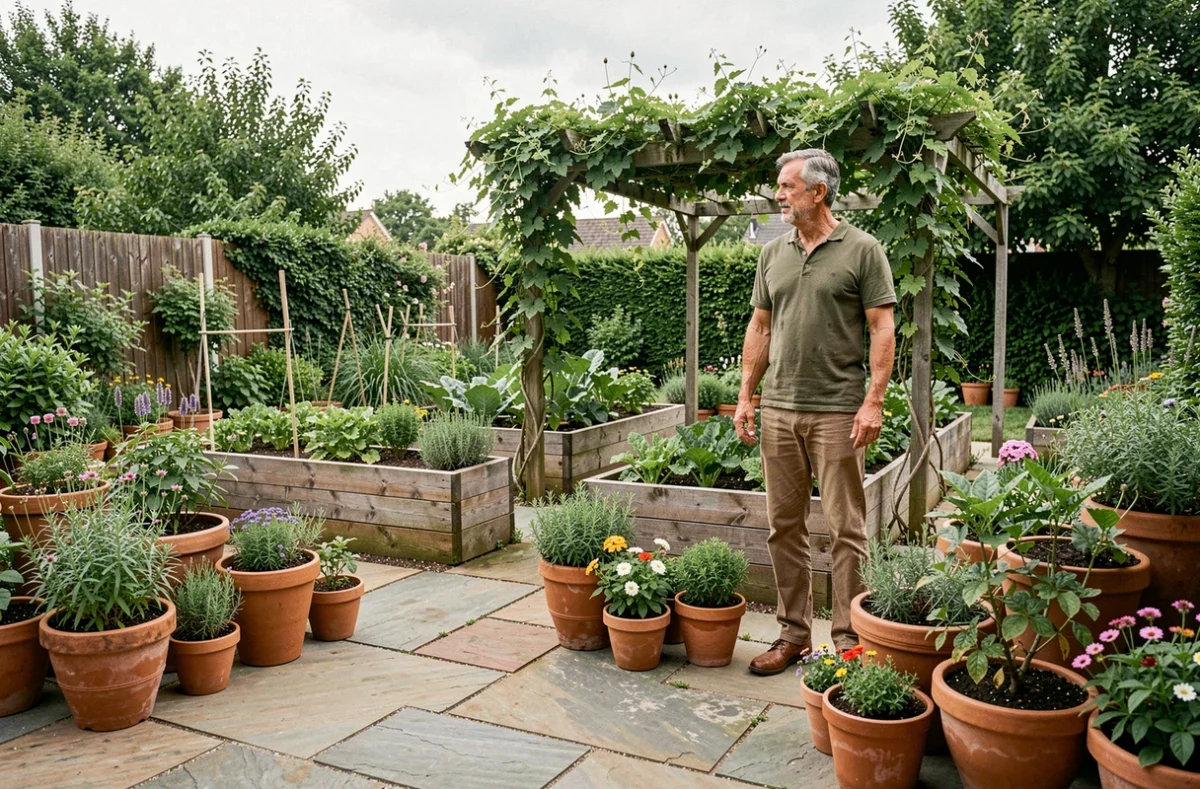
Have you noticed that a garden where everything is visible at a glance seems smaller than it really is? The basic principle of effective landscape design is to create distinct areas linked by transitions. You don’t need a large plot to put this approach into practice.
Identify no more than three functions
Make a list of what you want from your outdoor space: dining outside, letting the children play, growing a few vegetables, reading in peace. Choose three priority uses. Beyond that, the garden becomes a catalogue of features, with no area large enough to work properly.
- A living area (patio, garden furniture) close to the house, ideally accessible from the kitchen or living room.
- A planted area (flower beds, hedges, vegetable garden) that gives structure to the back of the garden and screens the neighbours.
- A circulation area (path, stepping stones, grass path) that connects the first two without cutting diagonally across the lawn.
This simple layout avoids the trap of a “flat” garden where the patio, lawn and flower bed follow one another without any rhythm.
Ground materials: consistency over variety
Limit yourself to two or three materials for the entire project. Composite decking for the patio, stabilised gravel for the path and natural stone for the edging are enough to create a cohesive space. Using too many different surfaces (exposed aggregate concrete, brick, slate, resin) visually fragments the garden and makes maintenance more difficult.
Your choice of materials should also complement the style of your home. A stone façade calls for warm tones and textured surfaces. A contemporary building with white render works better with smooth concrete or light-coloured timber decking.
Choose plants suited to tomorrow’s climate, not just today’s
Planting a Japanese maple in the south of France because it looks beautiful in photos is a recipe for disappointment. Sustainable garden design means planning for the climate over the next ten to twenty years, not just current conditions.
The AVEC project, carried out from 2023 to 2025 by Plante & Cité, ADEME and Cerema, studied the characteristics of around 2,100 plants in relation to their resistance to heat and drought, as well as their cooling potential. This data is available on Floriscope. Before finalising your plant list, check each species against its drought tolerance and actual water requirements.
Why does this choice matter as much as appearance? Because a poorly suited shrub needs more watering, more pruning and more treatments. It eventually dies or spoils the look of the flower bed. A well-suited plant grows on its own, fills out and provides shade or privacy without constant intervention.
- For hedges, choose evergreen species with low water requirements, such as laurustinus or pittosporum.
- For flower beds, combine perennials with staggered flowering times to provide colour in spring, summer and autumn.
- For shade, a deciduous tree planted to the south-west of the patio blocks the summer sun while letting light through in winter.
Outdoor lighting: shape the space after sunset
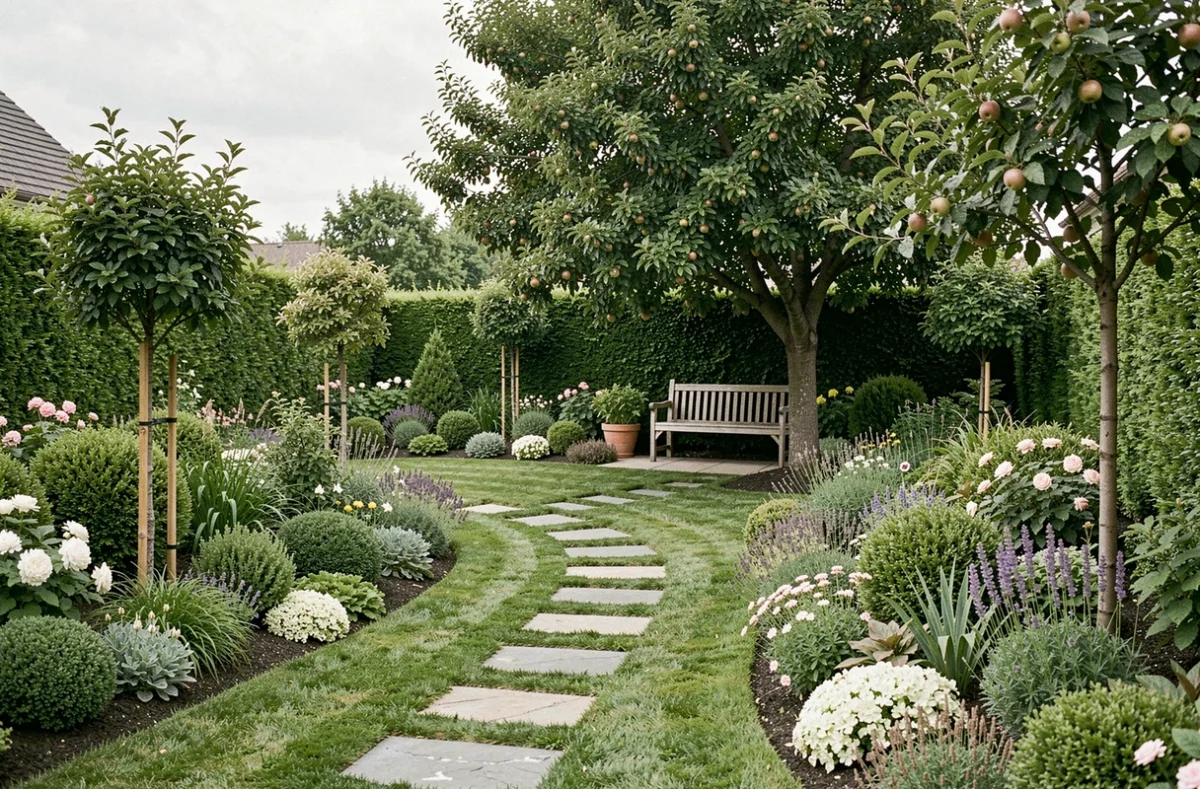
A well-designed garden by day can become a black hole at night. Lighting isn’t there to illuminate every corner, but to extend living areas and guide movement.
Install practical lighting along paths and at the entrance to the patio. Low bollard lights or recessed ground lights are enough to mark a path without causing glare. In the dining area, a string of lights or a pendant above the table creates atmosphere without flooding the garden with light.
A common mistake: motion-sensor floodlights
Many people install a powerful LED floodlight that switches on at the slightest movement. The result is harsh light that destroys the atmosphere and disturbs the neighbours. Reserve this type of lighting for security (gates, garages) and use indirect, subdued light in living areas.
A harmonious, welcoming garden is easy to read. Every area has a purpose, every plant has its place, and every material complements the house. The most successful projects aren’t those that pile on features, but those that strip them away until only what truly works remains.