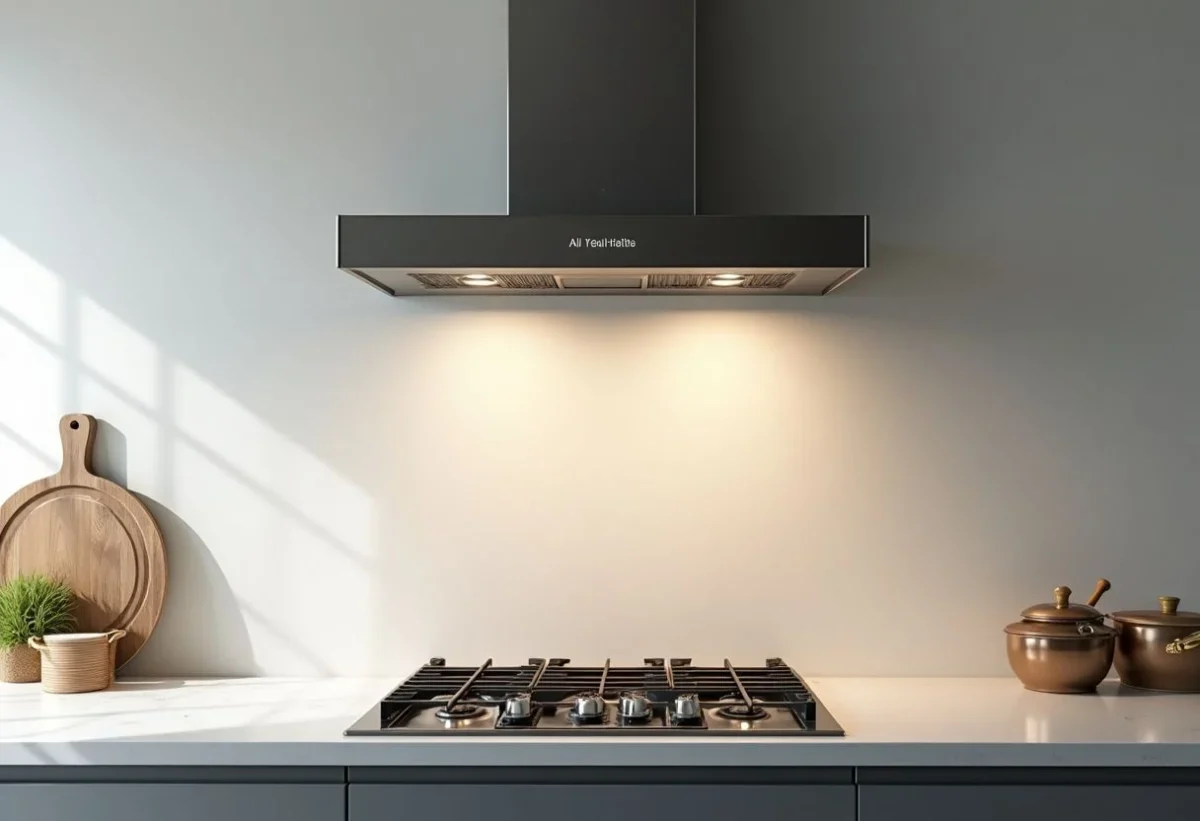
Installing a kitchen hood may seem like a complex task, but when it comes to a ductless hood, the process often turns out to be simpler and quicker. Today, ductless hoods, or recirculating hoods, attract many households thanks to their practicality and ease of installation. They do not require an external air duct to operate, making them the ideal choice for apartments or kitchens where major renovations are to be avoided.
Understanding how a ductless hood works
Before diving into the installation, it is essential to understand how a ductless hood operates. It is designed to recycle the air in your kitchen rather than venting it outside, which makes it very effective in urban environments.
- Odor and grease filtration: Equipped with charcoal filters, it eliminates odors and grease by capturing them, which is ideal for keeping a kitchen fresh and clean.
- Air circulation: The air is sucked in, filtered, and returned to the room, thus helping to maintain good indoor air quality.
- Flexible installation: Without the need for an external duct, it can be placed anywhere in the kitchen.
Preparation before installation
Preparation is a crucial step for successfully installing a ductless hood. Here’s how to proceed to ensure everything goes smoothly.
Start by choosing the ideal location for your hood. It should be above your cooktop and at an adequate height to ensure effective suction. Consider the height of the hood and the recommended distance by the manufacturer between the cooktop and the hood. Then, make sure that the electrical supply is accessible nearby to safely plug in the device.
It is also essential to have all the necessary tools at hand: drill, screwdriver, wall plugs, and the screws provided with the hood. Read the installation manual provided by the manufacturer carefully to avoid any surprises during assembly.
Installation process of the hood
Now let’s move on to the actual installation. This step requires a bit of patience and precision for a successful setup.
- Mark the spots: Using a level, mark the spots on the wall to attach the support for the ductless hood without a motor. Ensure that the marks are straight to avoid a crooked installation.
- Attach the support: Drill holes at the marked locations and insert the wall plugs. Then, secure the hood support to the wall, ensuring it is well anchored.
- Install the hood: Place the hood on its support and secure it firmly. Connect the power cable to a nearby electrical outlet.
- Check the proper functioning: Turn on the hood to ensure it operates correctly and adjust the filters if necessary.
Maintenance and upkeep
A ductless hood requires regular maintenance to ensure its efficiency and longevity. Here are some tips for properly maintaining your device.
The charcoal filters should be replaced every three to six months depending on usage to maintain good filtration quality. As for the grease filters, it is recommended to clean them every month with soapy hot water to prevent the buildup of greasy deposits.
Also, remember to regularly check the overall condition of the hood to detect any signs of wear or malfunction.