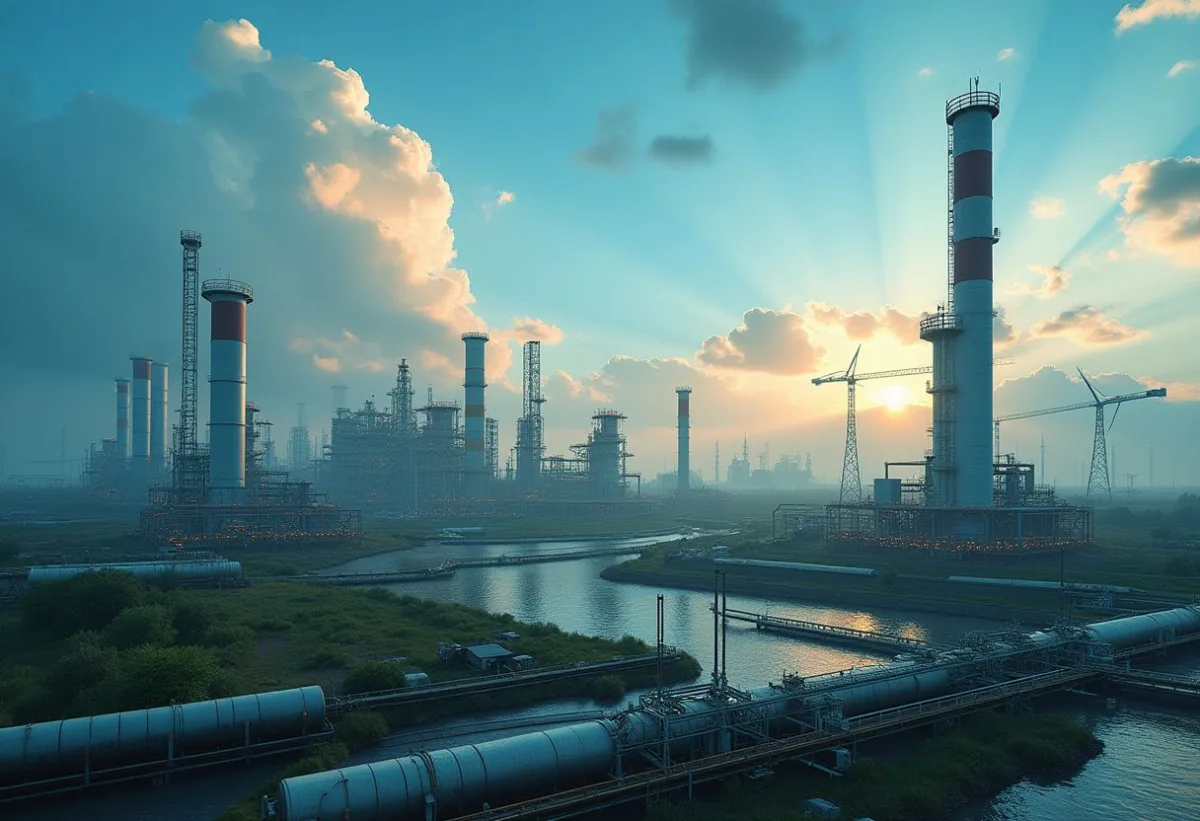
In an economic context where energy resources are at the heart of concerns, the price of natural gas per kilowatt-hour becomes an essential topic for households and industries. The issue of energy costs affects not only family budgets but also the strategic decisions of businesses. Between market fluctuations, government decisions, and ecological challenges, the price of natural gas influences every aspect of our daily lives. Understanding these dynamics is crucial for optimizing energy expenses and anticipating future variations.
Factors Affecting the Price of Natural Gas
Several elements influence the cost of natural gas per kilowatt-hour, and their complex interaction determines the final price paid by consumers.
- Supply and demand: the availability of natural gas on the global market plays a major role. An increase in demand without a corresponding increase in supply leads to a rise in prices.
- Government policies: taxes and subsidies decided by governments can significantly alter the price perceived by consumers. Initiatives to encourage green energy or carbon taxes can influence rates.
- Geopolitics: international relations, especially in gas-producing regions, can create tensions that affect prices. Any instability can cause unpredictable fluctuations.
- Seasonality: heating and cooling needs vary with the seasons, directly impacting natural gas consumption. Harsh winters or scorching summers can drive prices up.
Comparison with Other Energy Sources
Understanding how natural gas positions itself relative to other energy sources can help better assess its relative cost.
In the face of renewable energies, whose production costs are constantly decreasing, natural gas has an advantage in terms of supply stability. Sources like solar or wind energy heavily depend on weather conditions. However, the initial investment for these energies is often higher. On the other hand, coal, while often cheaper, is increasingly taxed due to its polluting emissions. Electricity, for its part, can be produced from multiple sources, complicating direct comparison. An analysis of a gas comparator often shows competitive rates for natural gas, making this source attractive for many households.

Reducing Consumption and Bills
Optimizing natural gas consumption is not just a matter of rates, but also of daily actions and wise investments.
- Invest in high-performance insulation: reducing heat loss in a home can significantly decrease energy consumption.
- Use efficient appliances: modern boilers consume less and heat better, resulting in savings on bills.
- Adopt responsible practices: lowering the heating by one degree or using an eco mode for appliances can make a big difference.
- Monitor consumption via connected tools: these devices provide real-time visibility on energy usage, allowing for better management.
Future Perspectives of the Natural Gas Market
Global energy trends shape the future of natural gas, and these should be considered to forecast the evolution of its prices.
With the rise of renewable energies, natural gas could play a transitional role towards a cleaner energy mix. Technologies like carbon capture and storage promise to reduce the ecological footprint of gas. However, the development of infrastructure for hydrogen could influence the demand for natural gas in the future. Global climate policies, aimed at limiting global warming, also push for a more measured and responsible use of every kilowatt-hour of gas. Thus, investments in research and development for sustainable energy solutions will play a crucial role in determining future prices.
Understanding the cost of natural gas per kilowatt-hour requires a multifactorial analysis that integrates economics, geopolitics, and technological innovations. Staying informed about market developments not only allows for better management of energy expenses but also contributes to more responsible and sustainable consumption.