Fine hair after 60 poses a specific technical problem: the hair fiber loses diameter with age, and overall density decreases. Finding a hairstyle that compensates for this loss of material without falling into the cliché of a too-conservative cut requires understanding some mechanisms related to hair structure and suitable cutting techniques.
Trixie cut for fine hair after 60: why this cut changes the game
The result of a cut on fine hair primarily depends on the mechanics of layering and the distribution of lengths.
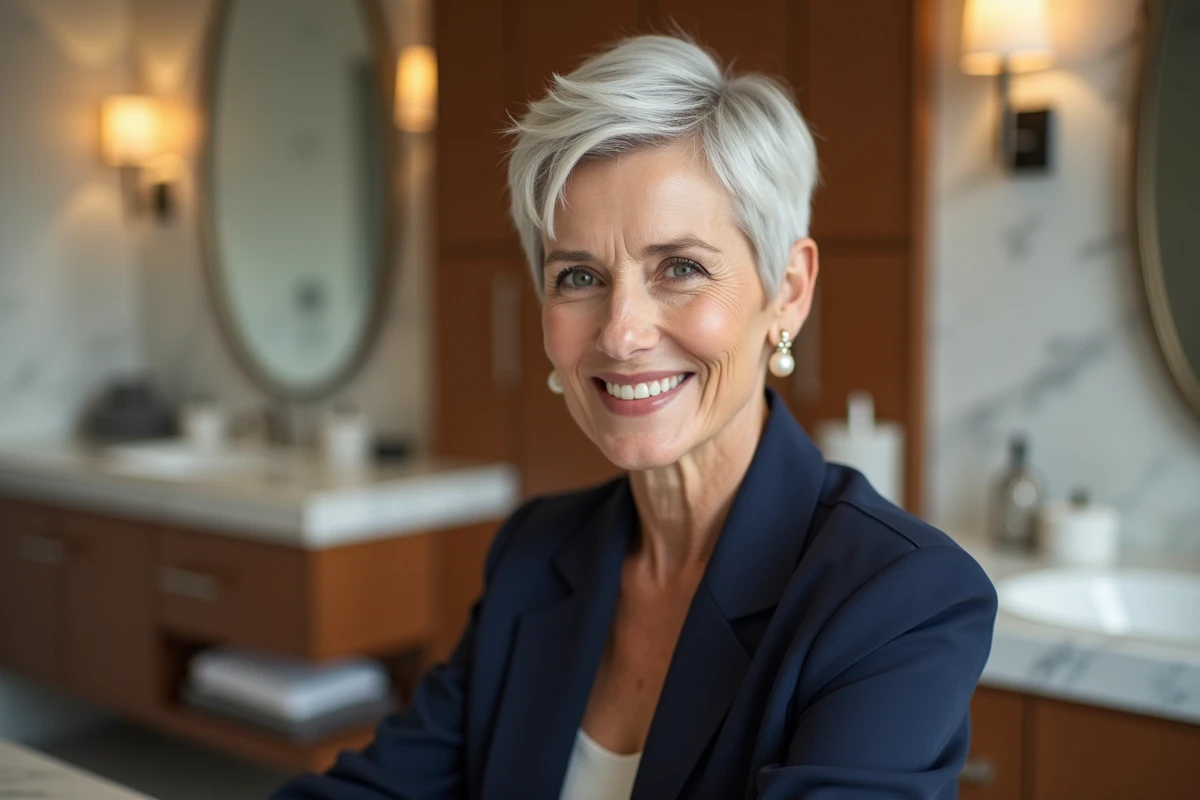
The British hairdresser Cos Sakkas, artistic director of Toni&Guy, has been highlighting since 2024-2025 a hybrid cut between a pixie and a short bob called the trixie cut. The principle: short sides, a clear nape, and length maintained on the top of the head. This contrast of lengths creates an optical density effect because the remaining mass concentrates where the eye first lands.
On fine, white hair, the trixie cut works particularly well. White hair has a slightly coarser texture than pigmented hair, giving it a bit more natural hold. The pronounced layering takes advantage of this characteristic to maintain volume without heavy styling products. Several beauty resources that address trendy hairstyles for fine hair women over 60 confirm the value of this type of structured cut for restoring movement to the hair.
Layering and volume on fine hair: technique matters more than the cut
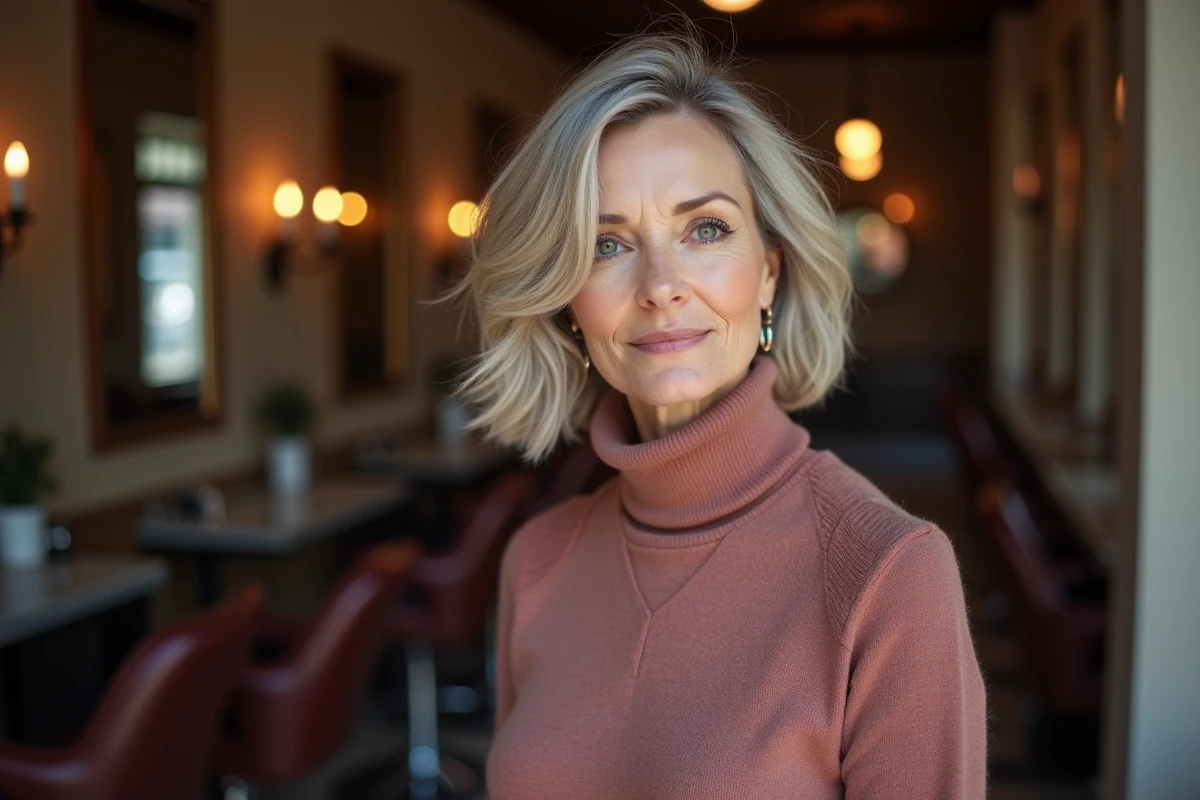
Choosing between a pixie, short bob, or trixie is one thing. The way the layering is executed determines the result on fine hair much more than the name of the cut.
A classic layering with straight scissors removes material uniformly. On thick hair, it lightens. On fine hair, it hollows out. Techniques that work for this hair type rely on minimal thinning and razor cuts or point cutting (tip of the scissors) that create movement without sacrificing apparent density.
The trap of overly pronounced layering on the ends
Many women with fine hair request layering to “add movement.” The risk: excessive thinning that makes the ends transparent. Volume is lost precisely where it should create the illusion of mass. A good layering for fine hair concentrates the layers on the top of the head and keeps the ends relatively full.
The role of bangs in the perception of volume
The curtain bangs, often mentioned in current trends, have a concrete advantage for fine hair: they visually redistribute hair mass towards the front of the face. The eye perceives more hair because the bangs frame the features and fill in the frontal area, often the first affected by thinning.
On the other hand, a straight and thick fringe is counterproductive on fine hair. It draws too much hair to one area and leaves the rest of the hair even sparser. Thinned or curtain bangs remain the most suitable choice for this hair profile.
Maintenance and cutting frequency: the often underestimated factor
A volumizing cut on fine hair has a limited lifespan. The layering loses its structure over the weeks, the strands become heavier, and the density effect fades. Hairdressers specializing in this type of cut recommend a return to the salon every 5 to 7 weeks to preserve the movement and shape of the layering.
This rhythm may seem restrictive, but it directly affects the outcome. A trixie or pixie layering that is not refreshed regularly loses its volumizing effect in a few weeks. Fine hair grows back unevenly, and the exposed areas (nape, sides) quickly catch up with the lengths on top.
Styling products: less is more
On fine hair, the temptation to use volumizing mousses or sprays is strong. The problem: most of these products weigh the fiber down as they accumulate. A minimalist approach generally yields better results on this hair type.
- Texturizing sprays with sea salt provide grip without weight, as long as they are not layered with other products
- Light styling mousses applied to damp hair, in small amounts (a dollop), work better than volumizing sprays applied to dry hair
- Blow-drying with a round brush, head down for the first few minutes, creates a base volume that products alone cannot replicate
Color and fine hair after 60: what densifies and what reveals
Color plays a direct role in the perception of density. A colored hair slightly swells because the pigments thicken the fiber. It’s a temporary but real effect.
Highlights or balayage on fine hair create an illusion of depth through the interplay of light between lighter and darker tones. The eye no longer easily distinguishes sparse areas because the color variations blur visual markers.
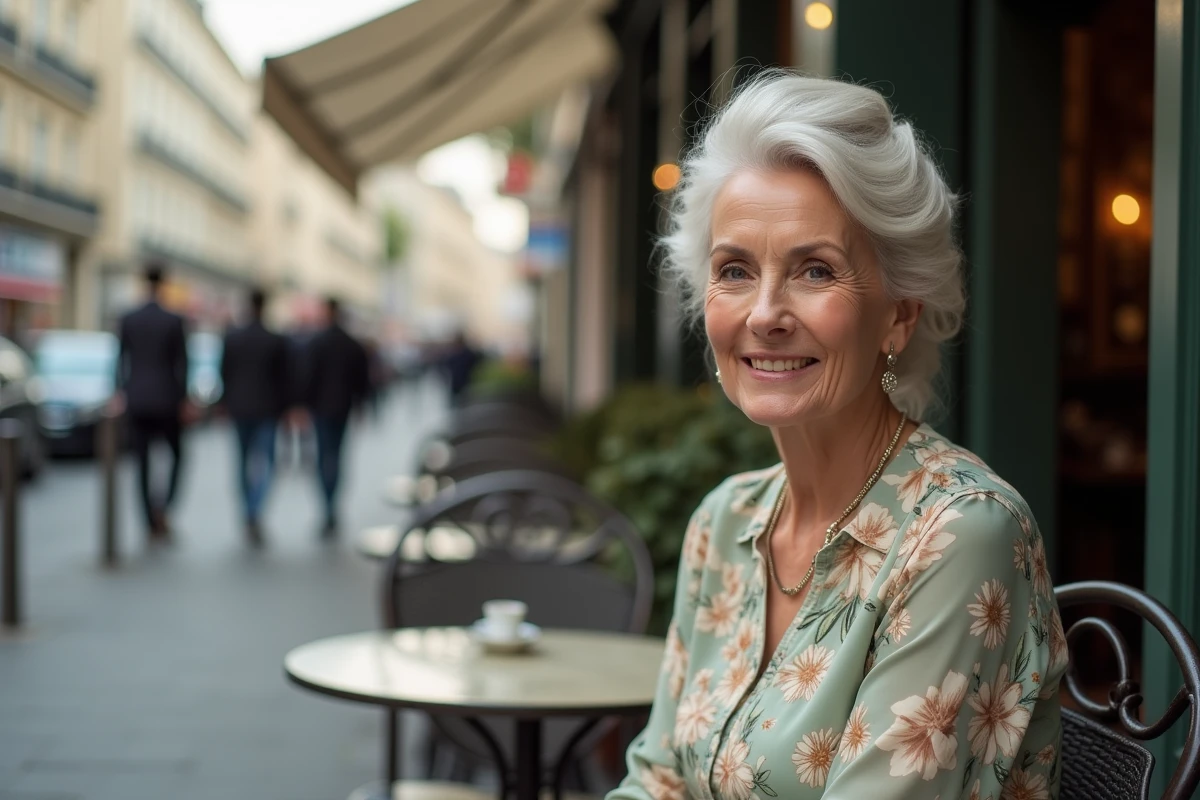
Assuming all-white works too, provided the cut is structured. A well-layered short white bob can appear denser than uniformly dyed medium-length hair because light catches differently on natural white hair.
- A ashy balayage on gray hair adds dimension without frequent root maintenance
- Uniform dark coloring on fine hair accentuates the sparse effect at the scalp, especially in direct light
- Golden or copper highlights on the frontal area draw attention to the face and divert attention from less dense areas
The choice between color and natural also depends on the sensitivity of the scalp, which often increases after 60. Plant-based dyes offer a less aggressive alternative, although their longevity and lightening ability remain limited compared to traditional chemical formulas.
The ideal hairstyle for fine hair after 60 does not exist as a unique model. It results from a balance between cutting technique, maintenance rhythm, and color treatment. The trixie cut or the layered pixie provide a framework, but it’s the execution in the chair that makes the difference between a cut that lasts three days and one that lasts five weeks.