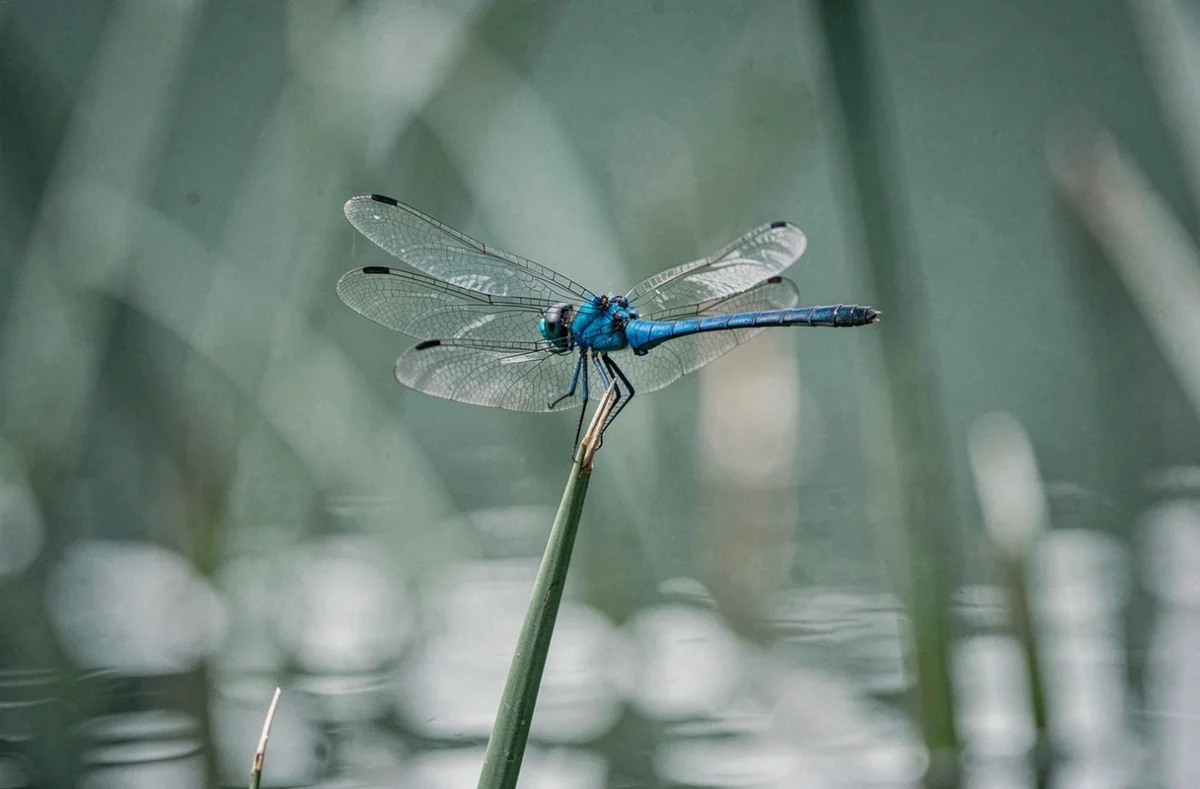
The blue dragonfly activates a vibrational resonance that most spiritual guides associate with the throat chakra (Vishuddha). This correspondence is based on a contemporary framework, not a universal nomenclature. Chakra systems vary according to yogic and tantric traditions: some texts describe four, five, six, or nine energy centers, with no consensus on the associated colors. Working with the blue dragonfly as a meditative support therefore requires precisely situating the framework in which one operates.
Variability of chakra systems and the blue color
The seven-colored chakra model based on the light spectrum solidified in Western neo-tantric literature during the 20th century. It represents only one interpretation among others. Several Shaivite lineages operate with a scheme of four or five centers, where the throat is not systematically individualized as a distinct chakra.
When we associate the blue dragonfly with the fifth chakra, we project a contemporary chromatic filter onto a natural symbol. This filter remains effective in guided meditation or visualization sessions, provided it is not presented as a universal law. The blue-throat association is a tool, not a dogma.
Practitioners who wish to deepen these correspondences can explore articles on Veriscope, where the vibrational dimension of the blue dragonfly is detailed in a structured framework.
In practice, we recommend always specifying the reference framework used when guiding chakra work with an animal or chromatic support. A client trained in a Tibetan tradition will not have the same reference points as a practitioner trained in kundalini yoga.

Blue dragonfly and aura: what science really measures
The aura, in esoteric vocabulary, refers to a colored field surrounding the body. No scientific measurement validates the existence of the aura as a structured energy field. Living organisms emit tiny amounts of photons, a phenomenon called biophoton emission, which varies with stress or physiological state. This physical emission does not correspond to the colored aura described in energy traditions.
This observation does not disqualify work on the aura. It requires distinguishing between two registers. The first is perceptual and subjective: a practitioner perceives or visualizes colors around the client. The second is physiological and measurable: breathing slows, heart rate decreases, and muscle tone relaxes.
Using the blue dragonfly as a visualization support to “cleanse the aura” produces real effects, but these effects pertain to relaxation and directed suggestion, not an interaction between the insect and a biophotonic field. We observe in sessions that visualizing a bright blue associated with the movement of dragonfly wings promotes a quick state of calm, likely through attentional focus.
Symbolic resonance and meditation protocol with the blue dragonfly
The strength of the dragonfly symbol lies in its biological cycle. The insect spends most of its life in larval form in water before emerging into the air. This water-to-air transition provides a coherent visualization support for working on the shift from a dense emotional state to a more fluid expression.
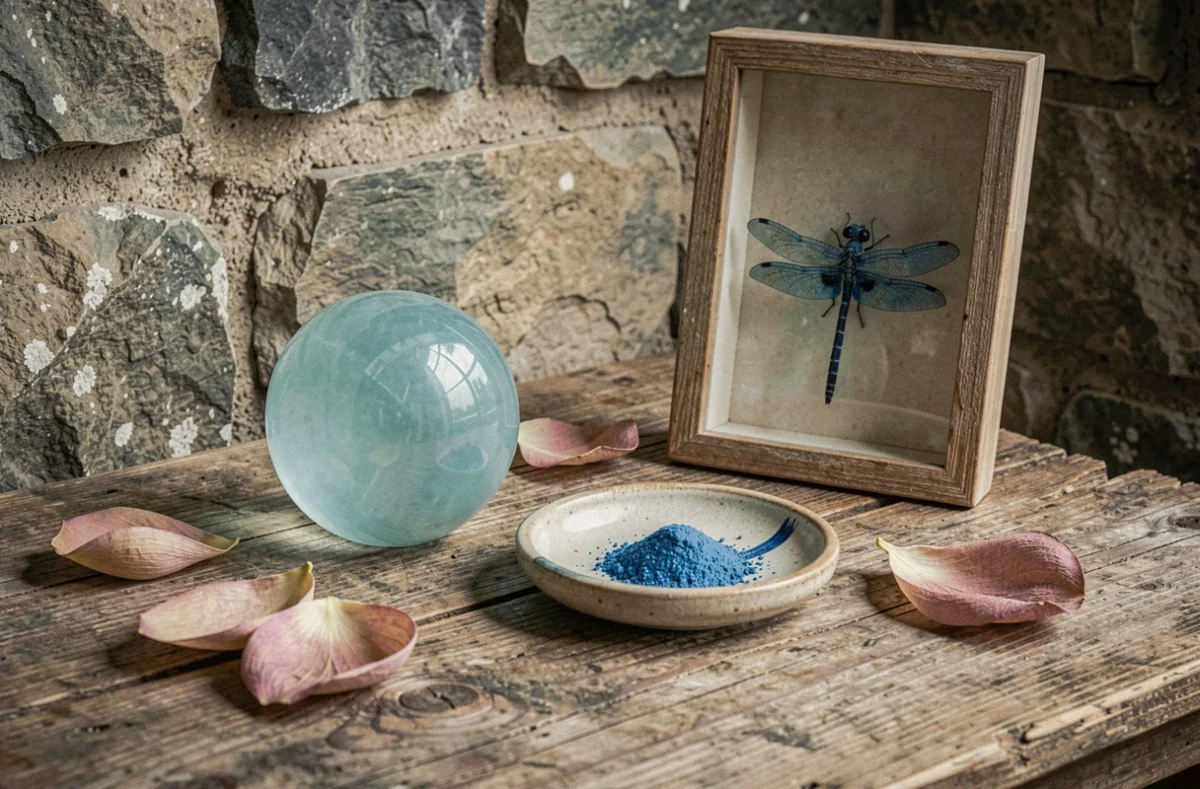
Here are the elements we integrate into a blue dragonfly-oriented meditation protocol:
- Aquatic anchoring phase: the practitioner guides a visualization where the client imagines being submerged, in contact with their unexpressed emotions, corresponding to work on the second chakra (Svadhisthana) in the seven-center model.
- Emergence phase: the transition to air symbolizes the shift to the throat chakra, with attention focused on high thoracic breathing and the vibration of the sound “ham,” a bija mantra traditionally associated with Vishuddha.
- Hovering phase: the client visualizes the iridescent blue wings, maintaining a floating attention that promotes relaxation of the trapezius and jaw, two tension areas related to expression retention.
The hovering of the dragonfly serves as a kinesthetic metaphor for active stillness. In sessions, this image allows clients to differentiate between passive “doing nothing” and an attentive presence without movement.
Adjusting the protocol according to the client’s profile
A client with a marked expressive blockage (muffled voice, tight throat, difficulty articulating needs) will benefit more from an extended emergence phase. The transition from water to air, accompanied by audible exhalations, gently mobilizes the larynx.
For a profile already fluid in expression but seeking emotional clarity, the aquatic phase deserves to be deepened. The blue dragonfly then acts less as a throat symbol than as a reminder of the emotional origin of all communication.
Blue dragonfly in natural surroundings: what observation brings to practice
Practitioners who integrate nature into their approach will benefit from understanding the actual ecology of the insect. The most common blue dragonflies in Europe belong to the genera Calopteryx and Orthetrum, found near slow-moving water and sun-exposed ponds.
Observing a dragonfly hovering over a pond activates a sensory register that indoor visualization does not fully replicate. The sound of water, the brightness, and the unpredictable trajectory of the insect contribute to an experience of spontaneous full attention. Direct observation surpasses visualization in anchoring the symbol in bodily experience.
The emergence season of imagos varies by species and regions, but the most favorable period in temperate Europe extends from spring to mid-summer. Planning an outdoor session during this window increases the likelihood of encountering the animal, transforming meditation into a lived experience rather than a mental exercise.
Any correspondence between an animal, a chakra, and an aura color remains a framework for interpretation. Its value lies in the quality of presence it generates in the practitioner and the client, not in an ontological truth about the energy of the insect. The rigor consists of using these tools without confusing the support with the source.