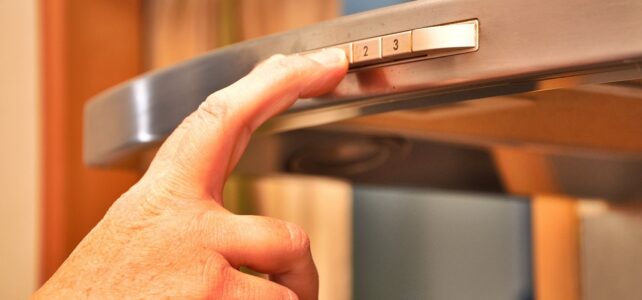
Modern kitchens require practical and efficient solutions to manage odors, smoke, and grease generated during cooking. Among these innovations, the ductless range hood stands out for its ingenious approach and adaptability to various home environments. This type of hood, also known as a recirculating hood, offers an interesting alternative to traditional external venting systems, particularly in buildings where the installation of a vent duct is impossible or difficult.
How Ductless Hoods Work
Ductless hoods rely on an air recycling system. Instead of expelling contaminated air outside, these hoods purify it and return it to the room, thus providing a viable solution for indoor air purification.
- Grease Filtration: The air sucked in by the hood first passes through a metal or synthetic grease filter. This filter captures grease particles suspended in the air, thus preventing their accumulation on kitchen surfaces.
- Odor Filtration: After passing through the grease filter, the air goes through a second filter, usually an activated carbon filter. This filter captures odors and smoke, effectively neutralizing them. Some advanced models integrate additional filters for even more thorough purification.
- Recycling of Purified Air: Once the air is filtered, it is returned to the kitchen through openings located around the perimeter of the hood. This process ensures constant air circulation and maintains a pleasant atmosphere in the kitchen.
Advantages of Ductless Hoods
For many households, ductless hoods offer notable advantages that make them very attractive.
Simplified Installation: Unlike external vent hoods that require a duct to expel air outside, ductless hoods are much easier to install. They attach directly above the cooking surface, without complex masonry or plumbing work. This makes them ideal for apartments or kitchens where installing a duct is impossible.
- Location Flexibility: Since they do not require a vent duct, these hoods can be placed anywhere in the kitchen. They are thus perfect for open kitchen layouts or cooking islands.
- Energy Savings: By recycling indoor air, ductless hoods help retain heat produced by heating in winter, thereby reducing energy needs to maintain a comfortable temperature.
- Reduced Environmental Impact: By avoiding the expulsion of smoke and odors outside, these hoods help reduce outdoor air pollution. Additionally, carbon filters can be recycled, providing a more eco-friendly solution.
Limitations and Maintenance of Ductless Hoods
Despite their many advantages, ductless hoods also have certain limitations that should be considered.
Limited Capacity: Although effective, these hoods may have a lower suction capacity than external vent hoods. For kitchens where intense cooking is frequent, it may be necessary to choose a more powerful model or opt for a restaurant charcoal hood that combines the benefits of both systems.
Regular Maintenance: The grease and carbon filters of ductless hoods need to be cleaned and replaced regularly to maintain their effectiveness. The grease filter should be washed about once a month, while the carbon filter should be replaced every three to six months, depending on usage intensity.
Cost of Consumables: Replacing filters can represent a recurring cost to consider. It is essential to check the availability and price of filters before purchasing to avoid unpleasant surprises.
Ductless hoods represent an ingenious and practical solution for managing smoke and odors in the kitchen, especially in environments where the installation of a vent duct is difficult. By understanding their operation, advantages, and limitations, users can make an informed choice tailored to their specific needs. Whether for simplified installation, flexibility, or energy efficiency, ductless hoods are a serious option to consider for modern kitchens.