Designing a modern boy’s room involves balancing several constraints at once: the child’s preferences, air quality, furniture safety, and the room’s ability to evolve without complete renovation. The following ideas focus on practical, verifiable solutions that can be adapted to different sizes.
1. Writable expression wall with VOC-free chalk paint
Applying a strip of chalkboard paint to a wall transforms the surface into a free drawing area. The child can doodle, display their projects, and then erase. The choice of paint matters: manufacturers now offer formulations with low volatile organic compound emissions.
Choosing low VOC paints reduces indoor pollution, which is especially relevant given recent recommendations emphasizing ventilation after renovations and the absence of solvent storage in the room. A comprehensive guide on boy’s room decoration on Read it details other ways to combine aesthetics with health considerations.
2. Cabin bed with GPSR compliance control
The cabin bed remains a reliable choice for stimulating the imagination. Its low structure is suitable for children from three years old and creates a reassuring landmark in the room. However, not all models meet regulatory standards.
Since December 13, 2024, the European regulation on general product safety (GPSR) requires risk analysis and enhanced traceability for products intended for children. Ensuring that the manufacturer displays this compliance helps avoid unpleasant surprises. Tipi and loft beds are similarly affected.
3. Zoning into three distinct areas: sleep, study, play
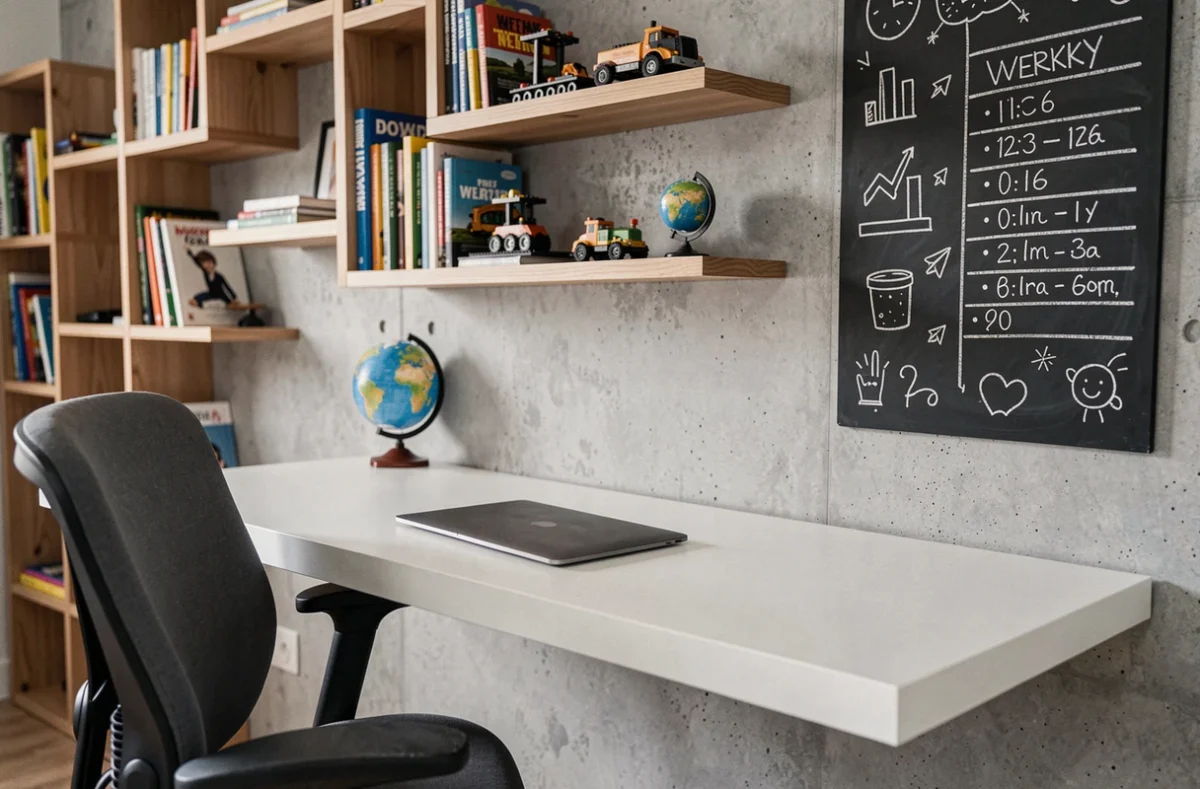
Dividing the room into three functional zones (rest, work, activity) helps the child associate each corner with a specific use. This principle, often linked to Montessori pedagogy, works even in small spaces as long as transitions are marked by a change in color on the floor or wall.
Three clearly defined zones promote the child’s autonomy. A differently colored rug under the reading corner, a desk oriented towards natural light, and an open space in the center for play are enough to structure the room without partitioning it.
4. Muted color palette instead of royal blue
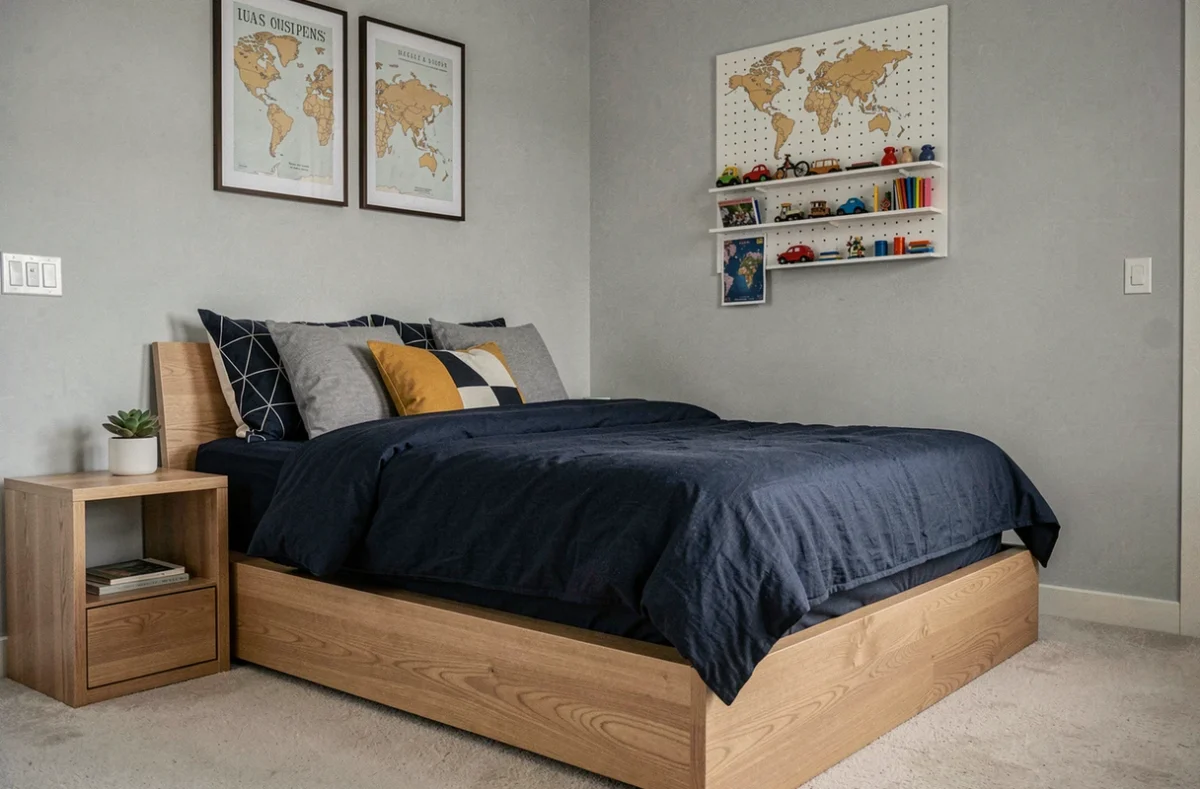
Saturated navy blue ages quickly and darkens small rooms. Muted shades (sage green, softened terracotta, bluish gray) provide a neutral backdrop that accommodates changing tastes without needing repainting every year.
Pairing two similar tones on adjacent walls creates depth without overwhelming. This approach moves away from the prevalent “all blue” seen in catalogs and aligns better with current trends in children’s interior decoration.
5. Wall storage accessible at child height
Installing low shelves, hanging baskets, or hooks less than a meter from the floor allows the child to organize their belongings independently. The benefits are twofold: less clutter and a daily boost in autonomy.
- Open shelves in raw wood at the child’s shoulder height for current books and toys
- Fabric bins labeled by category (Legos, stuffed animals, costumes) slid under the bed or in a low unit
- Decorative wall hooks (animal shapes, clouds) that serve as both decor and coat racks
Accessible storage reduces reliance on adults and fits into a logic of adaptable design: shelves can be raised as the child grows.
6. Evolving solid wood bed to last through the ages
An evolving bed transitions from a 60×120 cm format to a 90×190 cm format thanks to integrated extensions. Solid wood (beech, pine) withstands the years better than particle board and emits fewer VOCs, provided the adhesives used in assembly are checked.
The initial extra cost is offset by not needing to purchase a new bed for several years. Some manufacturers offer models whose structure becomes a desk or a bench once the child reaches adolescence.
7. Low-voltage string lights as decorative nightlights
Low-voltage LED string lights are a great replacement for traditional nightlights. Fixed along a shelf or around the cabin bed, they emit a soft light without heating up and consume little energy.
Dimmable light in the evening aids falling asleep while personalizing the atmosphere. Choosing a model with a timer prevents leaving the light on all night.
8. Repositionable panoramic wallpaper on a single wall
Applying a panoramic wallpaper on one wall (forest, world map, geometric pattern) adds character without confining the room to a too strong theme. Repositionable versions can be removed without damaging the surface, allowing for a change of decor as the child’s tastes evolve.
This type of covering is less expensive than a hand-painted mural and does not require special skills for installation. Checking for the “low emissions” label on the packaging remains a useful reflex.
9. Integrated desk under a loft bed for narrow rooms
In rooms smaller than ten square meters, placing the desk under a loft bed frees up floor space. The reclaimed area can serve as a play corner or additional storage.
- Opt for a loft bed with safety barriers on all four sides for children under six
- Install directed lighting under the tabletop to compensate for the lack of natural light
- Choose a desk surface deep enough to accommodate a screen during adolescence
The loft bed requires checking the ceiling height: below two meters forty, the lower space becomes uncomfortable.
10. Integrated ventilation and air renewal in the decor project
Indoor air quality is rarely addressed in decoration articles, yet it affects the child’s sleep and health. Paints, glues, and furniture made from wood-derived panels contribute to VOC emissions if precautions are not taken.
Since 2023, establishments hosting children in France must assess their ventilation means, measuring CO₂ levels. This requirement has been extended to other structures starting in 2025. Applying this logic at home involves simple actions: ventilate the room for at least ten minutes a day, avoid scented candles, and not store chemical products in the room.
A modern boy’s room is not just about color choices or themes. The safety of the furniture, air quality, and the decor’s ability to adapt to the child’s growth weigh as heavily as aesthetics in the success of the project.