A neighbor is selling their buildable plot at a price twice that of a similar piece of land in the same municipality. The difference is not due to the size or the neighborhood, but rather to the infrastructure and urban planning regulations applicable to each lot. Estimating the selling price of a piece of land requires going beyond local averages and considering each plot individually.
Buildability and infrastructure: the two levers that determine the value of a piece of land

Before even looking at prices per square meter, one must check what the Local Urban Plan allows for the plot. An area classified as AU (to be developed) does not hold the same value as a U (urban) area where a building permit can be applied for immediately. This distinction significantly alters the price range more than the location within a few streets.
The infrastructure is equally important. A plot connected to water, electricity, collective sanitation, and served by a public road is negotiated at a significantly higher price than a plot where everything remains to be created. Buyers factor in the cost of connection works into their offer, and an unserviced plot often sells well below the local average price.
One can consult actual transaction data through the Land Value Request service, which is accessible for free. A detailed method for cross-referencing this data with the specific characteristics of each plot is described on the Pratique Immo website, allowing for a more refined estimate beyond municipal averages.
Land estimation: why the average price per square meter is not enough
Online estimators and public databases display average prices by municipality or neighborhood. For an apartment or a house, this approach provides an acceptable order of magnitude. For a plot of land, it often leads to significant valuation errors.
The value of a plot depends on constraints that the average price does not capture: easements, adjacency to a flood zone, land slope, orientation, or the presence of an underground network that prohibits building on part of the surface. Two plots of the same size on the same street can show considerable discrepancies.
Micro-local variables to check before any estimation
- The nature of the soil and the topography: a sloped plot requires special foundations, which reduces its attractiveness to buyers and lowers the price
- Easements (access, view, network) recorded in the land registry or mentioned in the title deed, which limit the actual buildable area
- Access to the plot: an enclosed piece of land, without direct access to the public road, suffers a marked depreciation even if it is located in a sought-after area
- The floor area ratio and the maximum height allowed in the PLU, which determine what can actually be built
Obtaining the operational urban planning certificate from the town hall remains the most useful step before setting a price. This document specifies the applicable rules, urban planning taxes, and any limitations. Without it, any estimate remains approximate.
Comparing actual land transactions to adjust the selling price
The most reliable method for estimating the price of a plot is to compare sales of similar plots within a limited radius. The Land Value Request service, provided by the Ministry of Economy, lists real estate transactions declared by notaries. It includes the price, area, nature of the property, and address.
For the comparison to be relevant, one should consider sales of plots (and not houses or apartments) completed in the last two or three years, on plots whose area and buildability are similar to the property being estimated. Opinions vary on this point, but a minimum of three comparable transactions is necessary to identify a trend.
Cross-referencing public data with a land analysis
Raw data does not tell the whole story. A transaction listed at a very low price may correspond to a sale between family members or a plot burdened by an easement not appearing in the database. Conversely, a high price may reflect a plot already subdivided with an obtained development permit.
One gains precision by combining three sources: land values, the PLU available at the town hall, and a physical visit to the plot. The intersection of these three elements provides a realistic price range, much more reliable than an automatic estimator calibrated for housing.
Difficult land: anticipating discounts before putting it on the market
Some plots accumulate constraints that deter typical buyers. A plot in a water retention area, a parcel exposed to a risk of clay shrink-swell, or soil suspected of previous pollution do not sell at standard market prices.
Rather than discovering these issues during negotiations, it is advisable to document them in advance. Requesting a soil study (type G1) or consulting the natural risk prevention plan helps quantify the constraint and adjust the price accordingly.
- Enclosed plots often require negotiating a right of way with a neighbor, which extends the sale timeline
- A plot located in a non-collective sanitation zone requires the buyer to install a septic tank or a micro-station, a cost that the market reflects in the price
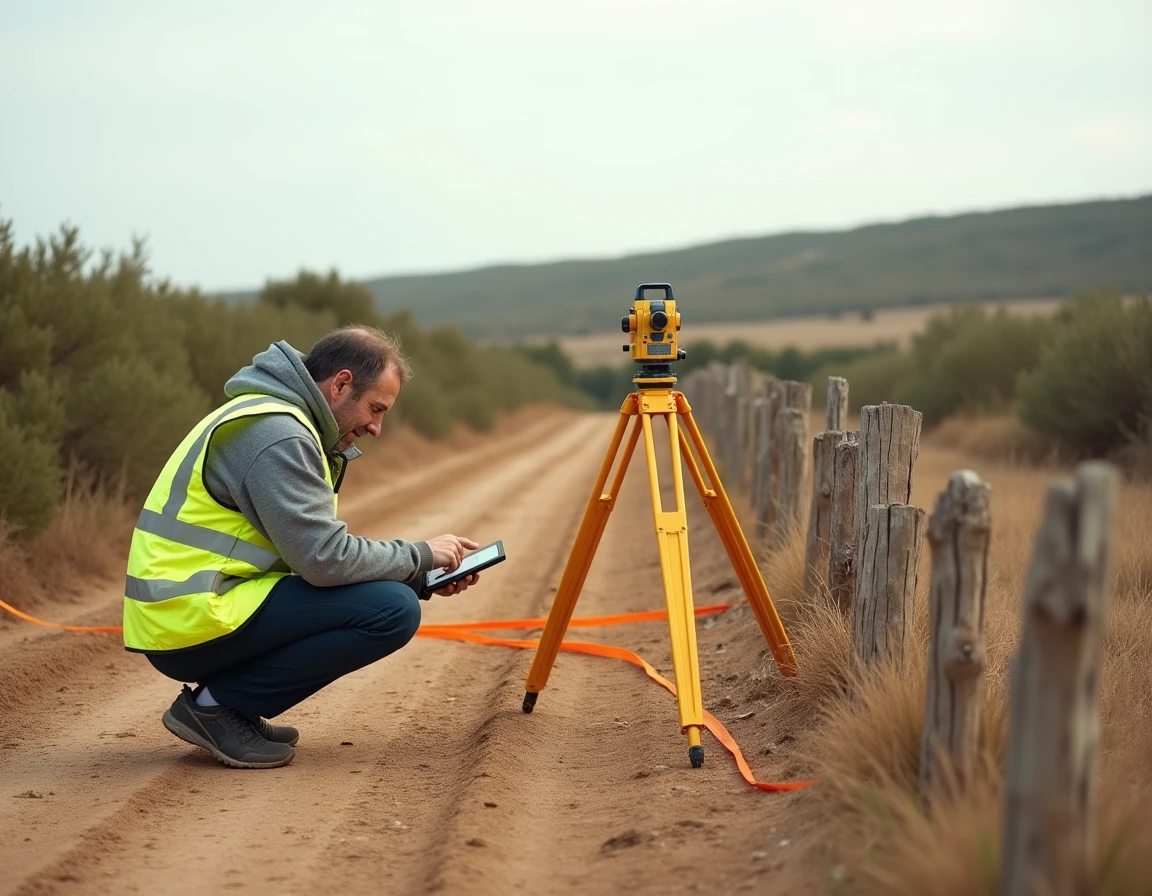
- Parcel division, if considered to enhance a large area, requires surveying by a licensed surveyor and a prior declaration at the town hall
For these atypical plots, setting a transparent price justified by technical documents accelerates the sale rather than hindering it. Buyers willing to purchase a complex plot want data, not promises.
Estimating a plot of land is not just about searching for an average price. Each plot carries its own urban planning, soil, and access constraints, and it is the combination of these factors that determines its real market value.